To stop water damage from causing laminate seam swelling, act quickly by removing any standing water and drying the area with fans or a dehumidifier. Cover the affected spots to prevent further moisture penetration, and consider sealing minor gaps or applying seam sealant to reinforce the seams. Regular inspections and moisture monitoring help catch issues early. If swelling worsens, consulting a professional can save your floor. Keep going to learn more about protecting your floors effectively.
Key Takeaways
- Immediately remove standing water and cover affected areas to prevent further seepage.
- Use fans or dehumidifiers to accelerate drying and reduce moisture beneath the laminate.
- Gently press seams back into place and apply sealant to reinforce minor swelling.
- Seal gaps and cracks with caulk and install moisture barriers to prevent water infiltration.
- Regularly monitor moisture levels with meters and address leaks promptly to stop water damage early.
What Causes Water to Swell Laminate Seams?
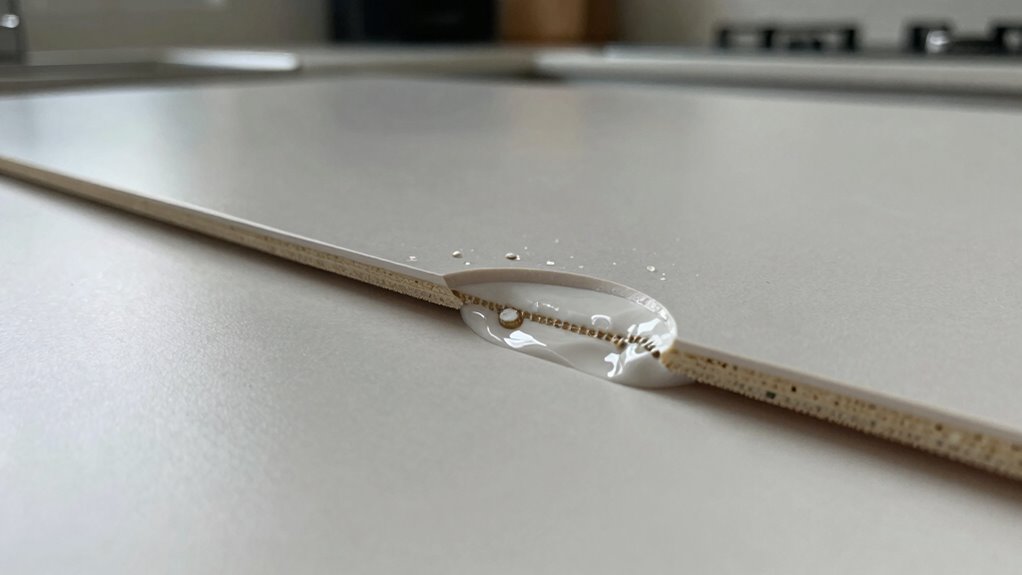
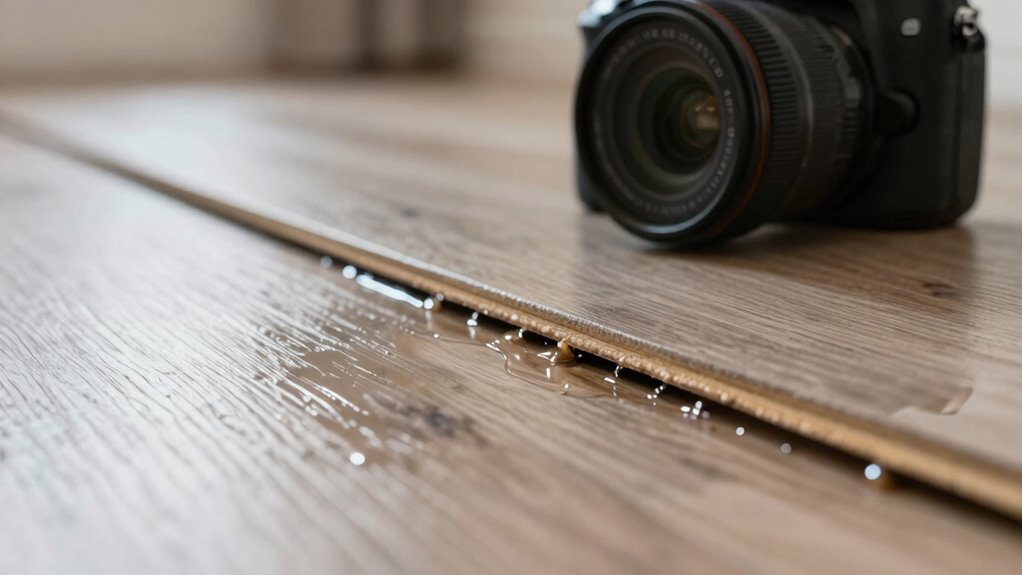
Water causes laminate seam swelling because it seeps into the tiny gaps and imperfections where the panels join. When moisture absorbs into the laminate, it triggers seam expansion, weakening the bond between panels. This process occurs because laminate flooring isn’t completely waterproof; even small leaks or spills can lead to moisture infiltration. As water enters, it causes the fibers and core materials to swell, pushing the seams apart. Over time, this moisture absorption accelerates seam swelling, creating gaps and uneven surfaces. The more water gets in, the worse the swelling becomes, compromising the floor’s appearance and structural integrity. Understanding how water causes seam expansion helps you take preventive steps to protect your laminate flooring from water damage. Proper sealing and regular maintenance are essential to prevent moisture infiltration and maintain the flooring’s durability. Recognizing the material properties of laminate can also guide you in choosing more water-resistant options. Additionally, understanding water-resistant materials can help in selecting flooring that better withstands moisture exposure. Being aware of the effects of water damage can further assist in early detection and mitigation efforts.
How to Detect Water Damage in Laminate Floors Early
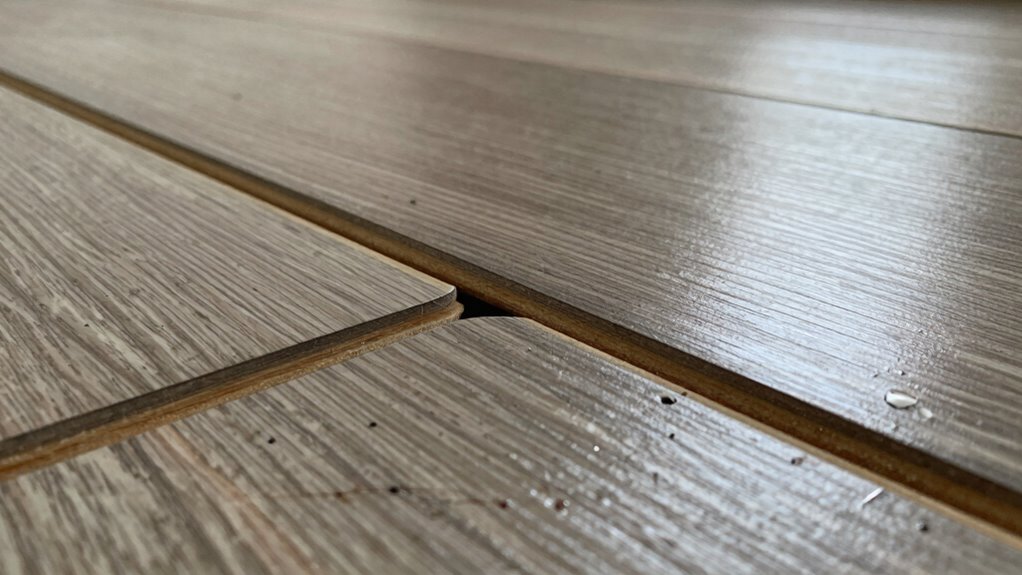
Early detection of water damage in laminate floors is essential to prevent costly repairs and extensive repairs. Look for subtle signs like color variation, which can indicate moisture infiltration beneath the surface. Changes in the floor’s hue, especially dullness or dark spots, often signal early water damage. Maintaining proper humidity control helps prevent moisture buildup, reducing the risk of swelling and warping. Regularly inspect your floors, especially around sinks, appliances, and doorways, where water exposure is common. Use a moisture meter if you suspect hidden damage. Pay close attention to areas with uneven coloration or soft spots, as these are early indicators of underlying water issues. Understanding moisture levels can also help you better prevent and detect early damage. Additionally, staying aware of indoor humidity levels can contribute significantly to preventing moisture-related problems. Proper air circulation and ventilation are vital in controlling indoor moisture and minimizing the risk of laminate swelling. Monitoring indoor humidity is an effective way to catch potential issues before they become severe. Being mindful of potential water sources in your home can help you address problems proactively. Addressing problems promptly can save you time, money, and the hassle of major repairs later.
Quick Steps to Minimize Water Damage Right Away
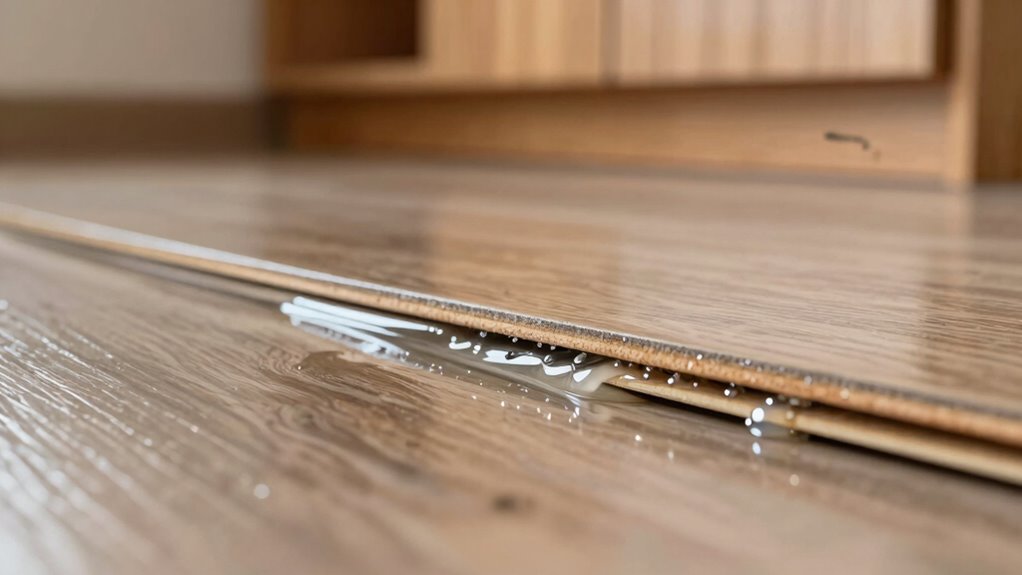
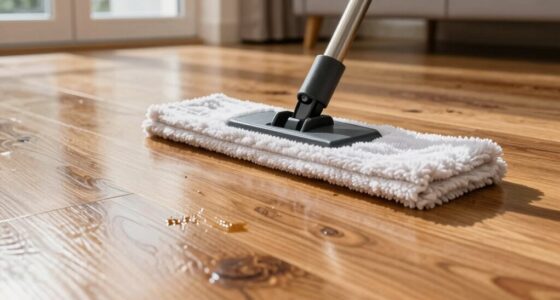
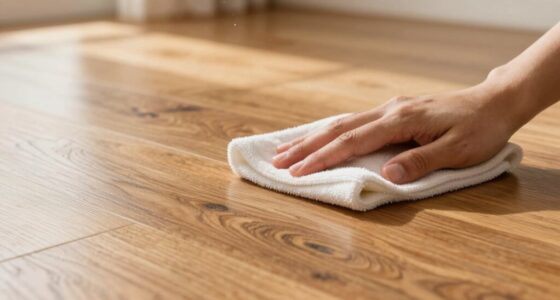
When you notice a spill or leak on your laminate floor, acting quickly can prevent serious damage. Start by removing any standing water with a dry towel or mop. Apply immediate waterproofing strategies, such as placing a plastic sheet or tarp over the affected area to contain moisture and prevent further seepage. Use fans or a dehumidifier to accelerate drying, reducing the risk of swelling and warping. An effective emergency response includes turning off the water source if possible and avoiding walking on wet surfaces to prevent spreading damage. Prompt action minimizes water infiltration, protecting your floor from extensive damage. Incorporating smart moisture detection systems can also help monitor and alert you to potential leaks early, preventing damage before it worsens. Additionally, understanding waterproofing techniques can enhance your response and help prevent future issues. Proper flooring maintenance is essential to extend the lifespan of your laminate floors and avoid recurring problems. Regular inspections and preventive care can further reduce the likelihood of swelling and long-term harm. Being aware of early signs of water damage can help you catch issues before they escalate. Remember, swift containment and thorough drying are key to stopping water from seeping deeper into the laminate and causing long-term harm.
Prevent Water Seeping Into Your Laminate Floors

To keep water out of your laminate floors, start by sealing any gaps and cracks that might let moisture in. You should also place protective mats at entry points and high-traffic areas to catch water before it reaches the floor. Taking these simple steps can considerably reduce the risk of water seeping in and causing damage. Additionally, understanding how moisture management impacts flooring can help you better prevent water infiltration. Proper installation techniques and regular maintenance are also crucial in maintaining a moisture-resistant barrier around your floors. Being aware of water-resistant materials can further enhance your efforts to protect your laminate flooring from damage. Using water filtration systems can also help reduce indoor humidity levels, thereby minimizing moisture buildup that could lead to swelling.
Seal Gaps and Cracks
Sealing gaps and cracks in your laminate flooring is essential to prevent water from seeping underneath and causing swelling. Start by caulking gaps around edges or between planks to block entry points. Use moisture barriers in larger gaps or near doorways to add an extra layer of protection. Here are four effective steps:
- Clean the gaps thoroughly to remove dust and debris.
- Apply high-quality caulk designed for flooring to seal small cracks.
- Install moisture barriers in wider gaps or areas prone to spills.
- Inspect regularly and reapply caulking or replace barriers as needed.
Ensuring your home’s design principles incorporate proper sealing techniques can help maintain a beautiful, functional space.
Use Protective Mats
Using protective mats is an effective way to prevent water from seeping into your laminate floors, especially in areas prone to spills or moisture exposure. Proper mats placement is key; position them under sinks, around appliances, or in entryways where water is likely to be present. These mats act as a barrier, catching spills before they reach the laminate surface. Make sure the mats are waterproof and non-slip for safety and durability. Regularly inspect and replace worn or soaked mats to maintain spill prevention. In addition, choosing mats with waterproof properties enhances their effectiveness against moisture penetration. Incorporating proper placement techniques ensures maximum coverage and protection. By strategically placing protective mats, you reduce the risk of water seeping into seams and causing swelling. Effective water barrier is essential in protecting your floors from damage. This simple step helps keep your floors dry and protected, preventing costly damage and extending the life of your laminate flooring.
How to Repair Swollen Seams and When to Call a Professional
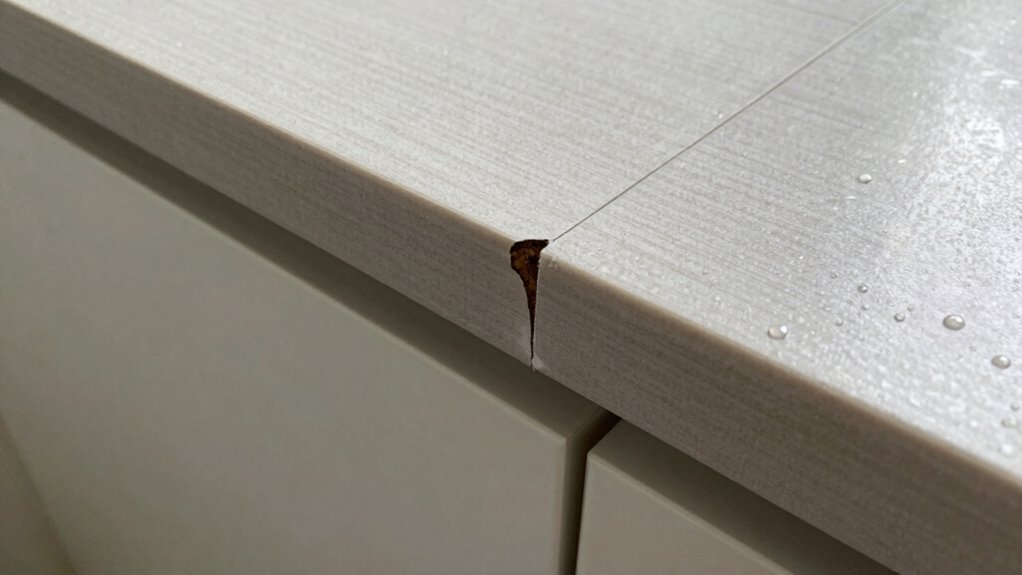
When you notice swollen seams on your laminate flooring, it’s important to act quickly to prevent further damage. First, dry the area thoroughly to stop ongoing moisture. Then, consider these steps:
- Seam reinforcement: If the swelling is minor, you can try gently pressing the seam back into place and applying a seam sealant. Proper moisture mitigation can help prevent future swelling issues.
- Drain excess water: Remove any standing water to prevent further swelling.
- Use a heat gun: Carefully apply heat to shrink the laminate and help the seam settle.
- Call a professional repair if swelling persists or worsens, especially for extensive damage. A professional can assess whether seam reinforcement is enough or if replacement is necessary. Remember, attempting major repairs yourself might cause more harm. Smart kitchen tools can also help monitor moisture levels in your home to prevent future issues.
Long-Term Tips to Protect Your Laminate Floors From Water Damage

To keep your laminate floors safe from water damage over time, you need to implement consistent preventive measures. Prioritize enhancing laminate durability by using mats and rugs in high-traffic or wet areas, like kitchens and entryways. Maintain proper moisture resistance by promptly cleaning spills and avoiding excessive water exposure during cleaning. Use furniture pads to prevent scratches that can weaken the surface, making it more vulnerable to water intrusion. Regularly check for leaks or plumbing issues, and fix them immediately. Keep humidity levels stable with a dehumidifier, especially in humid climates. These steps help preserve your floors’ integrity, preventing swelling and long-term water damage. By taking proactive care, you extend the lifespan of your laminate flooring and maintain its appearance.
Frequently Asked Questions
Can Swollen Laminate Seams Be Fixed Without Replacing the Entire Floor?
Yes, you can often fix swollen laminate seams without replacing the entire floor. Repair options include using a seam sealer or applying gentle heat to shrink the swelling. To prevent future issues, keep the area dry, clean spills immediately, and use mats in high-moisture zones. Regularly inspecting your flooring and maintaining proper humidity levels helps avoid water damage and keeps your laminate looking its best.
How Long Does It Typically Take for Water Damage to Cause Visible Swelling?
Water damage can cause visible swelling in your laminate seams within 24 to 48 hours, depending on the amount of moisture and the exposure duration. Timing indicators, like increased seam lift or warping, suggest damage progression. If you notice these signs early, you can often prevent further issues by removing the water quickly. Acting swiftly minimizes the risk of extensive damage and costly repairs.
Are Certain Types of Laminate Flooring More Resistant to Water Damage?
Yes, certain laminate flooring types are more resistant to water damage. Floors with water-resistant finishes help repel moisture, reducing swelling risk. Additionally, cores made from durable materials like high-density fiberboard (HDF) or stone plastic composite (SPC) enhance the floor’s resistance. Choosing laminate with these features means you get better protection against water, making your flooring more resilient and longer-lasting even in moisture-prone areas.
What Are the Signs of Hidden Water Damage Beneath the Surface?
Think everything’s fine until you notice the distorted seams or a slight warping—surprisingly obvious signs of hidden water damage. Moisture intrusion often hides beneath the surface, leading to unseen problems like hidden mold and structural weakening. You might not see leaks, but dampness can silently spread, causing damage that’s tough to spot at first. Stay vigilant, because ignoring these signs means risking costly repairs down the line.
Is It Safe to Walk on Laminate Floors With Swollen Seams?
It’s not safe to walk on laminate floors with swollen seams because of safety concerns and compromised floor stability. Walking on unstable areas could cause the laminate to crack or worsen water damage, increasing the risk of injury. To protect yourself, avoid putting weight on swollen seams and consider professional repair. Addressing the moisture source promptly helps prevent further damage and keeps your floor safe for future use.
Conclusion
By being vigilant and swift, you can prevent water from worsening your laminate woes. Spot seams swelling, seal leaks swiftly, and safeguard your space with smart solutions. Staying proactive and prepared turns potential problems into mere patches, preserving your floors’ flawless finish. Remember, quick action curbs costly chaos, keeps your laminate lively, and preserves peace of mind. Protect, prevent, and power through water woes with confidence—your floors will thank you.