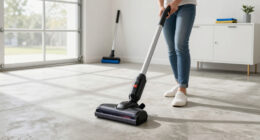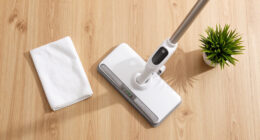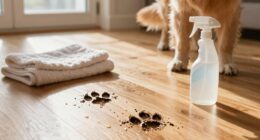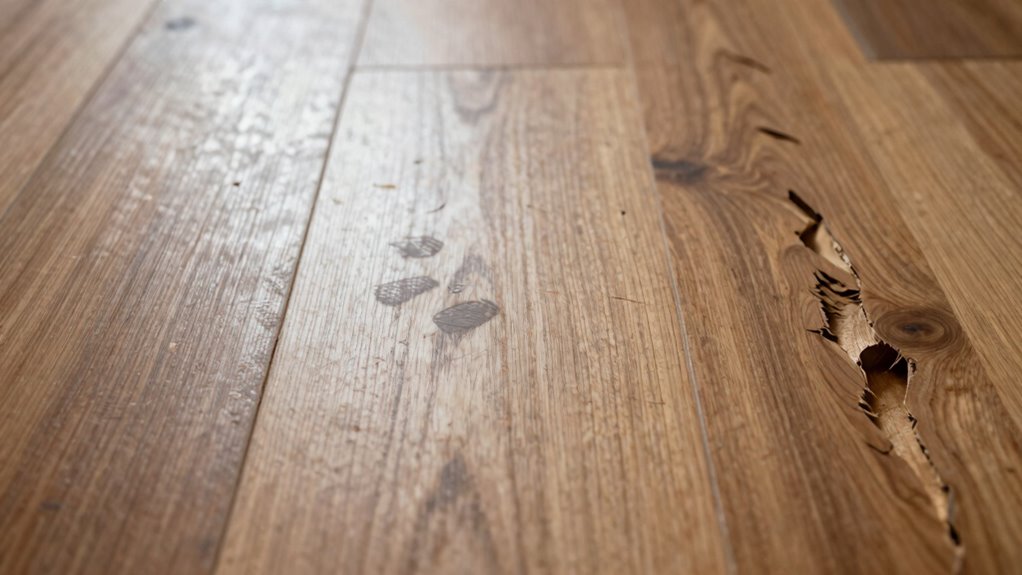
When you spot marks on your floors, it’s key to tell them apart. Scuffs are superficial and can often be wiped away easily, while transfer marks come from items like furniture and may require more effort to clean. Real damage, like scratches or dents, penetrates the surface and usually needs professional repair. Understanding these differences helps you address issues effectively. Keep exploring to find out how to protect your floors and tackle each type of mark efficiently.
Key Takeaways
- Scuffs are superficial marks easily wiped away, while transfer marks involve residue from objects, often requiring gentle cleaning methods for removal.
- Real damage includes scratches and dents that penetrate the floor’s finish, exposing underlying material and requiring more extensive repair.
- Scuffs can be removed with a damp cloth, while transfer marks may need specific cleaners, indicating different cleaning approaches.
- Regular inspections help differentiate between scuffs, transfer marks, and real damage, ensuring appropriate maintenance measures are taken.
- Knowing the differences aids in deciding whether to use DIY methods or seek professional help for repairs.
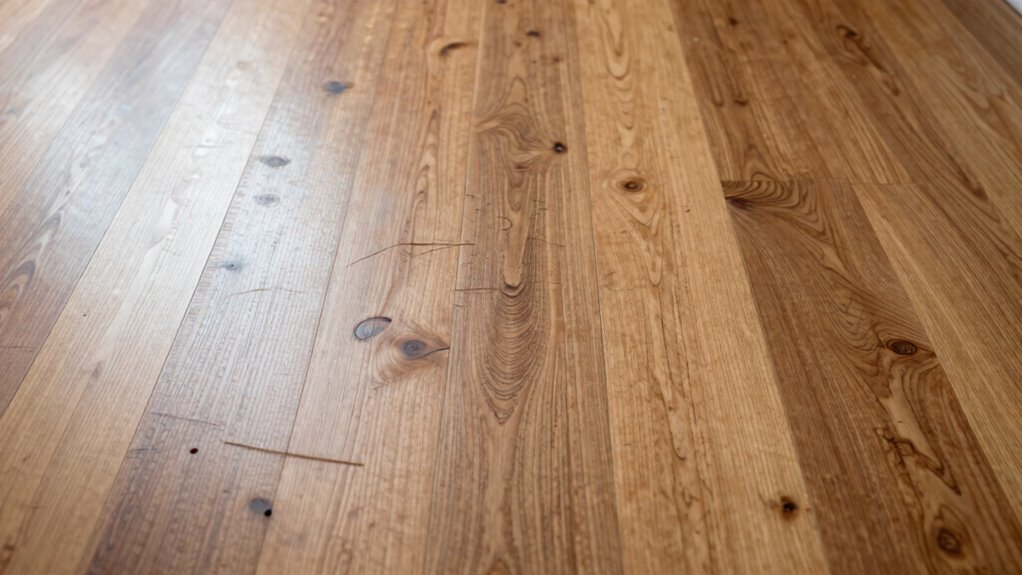
When you notice marks on your floor, it’s easy to confuse scuffs with actual damage. Scuffs are often superficial, caused by shoes, furniture, or other items making contact with your floor. They usually don’t penetrate the finish or material, meaning they’re often fixable through simple scuff removal techniques. On the other hand, real floor damage can involve scratches, dents, or areas where the finish has worn away, exposing the underlying material. Recognizing the difference between these marks can save you time and money.
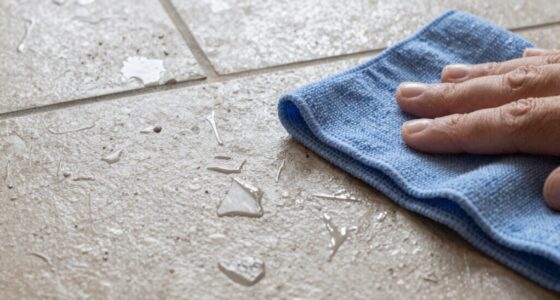
To determine whether a mark is just a scuff or something more serious, start by examining the depth and texture. If you can wipe it away with a damp cloth or a gentle cleaner, you’re likely dealing with a scuff. For instance, a scuff on hardwood can often be removed with a soft cloth and a bit of rubbing. If you find that the mark remains stubborn or seems to be embedded in the surface, it may indicate damage that requires more attention. Understanding the importance of surface protection can help prevent future marks and damage. Additionally, regular maintenance and protective measures can extend the life of your flooring.
Examine the depth and texture of marks; if easily wiped away, it’s likely just a scuff. Persistent marks may require further attention.
Surface protection is essential in keeping your floors looking pristine. Investing in rugs, furniture pads, and even applying a protective coating can prevent future scuffs and damage. These measures can help you maintain the integrity of your floor, making it less susceptible to the everyday wear and tear that leads to unsightly marks. It’s all about being proactive rather than reactive. Using protective accessories can further reduce the risk of marks caused by daily use.
If you discover that a mark is indeed a scuff, you can take straightforward steps for scuff removal. For wood floors, a mixture of vinegar and water can be effective. For vinyl or laminate, a gentle cleaner designed for those surfaces works wonders. Just remember not to use abrasive materials that could worsen the situation. Being cautious with cleaning products and techniques can help preserve your flooring’s finish.
In contrast, if you face a deeper scratch or dent, you might need to evaluate refinishing or professional repair. Knowing when to DIY and when to call in the experts can make a significant difference in preserving your floor’s appearance. Being aware of the different types of floor damage can guide you in choosing the appropriate repair method. Ultimately, keeping an eye on the condition of your floors and understanding the difference between scuffs and actual damage will help you maintain them effectively. With the right approach to scuff removal and surface protection, you can guarantee your floors continue to look their best for years to come.

REALINN Wood Furniture Repair Kit- Set of 28 – Touch Up Markers, Fillers with Wood Putty – Repair Scratch, Cracks, Hole, Discoloration for Wooden Door, Floor, Table, Cabinet
- Complete Repair Kit: Includes fillers, markers, putty, wax, tools
- Versatile Damage Repair: Fix scratches, chips, cracks, holes, discoloration
- Easy Application: Apply fillers, smooth with scraper, touch up with markers
As an affiliate, we earn on qualifying purchases.
As an affiliate, we earn on qualifying purchases.
Frequently Asked Questions
Can Scuffs Affect the Overall Value of My Flooring?
Yes, scuffs can affect the overall value of your flooring. If you neglect floor maintenance, these marks may accumulate and lead to a less appealing appearance. During a value assessment, potential buyers might see scuffs as a sign of poor upkeep, which could lower their offer. Keeping your floors clean and addressing scuffs promptly helps maintain their value and guarantees they look their best for years to come.
How Can I Prevent Transfer Marks on My Floors?
To prevent transfer marks on your floors, focus on regular floor maintenance and take some simple preventative measures. Use area rugs in high-traffic spots and place mats at entryways to catch dirt and debris. Clean your floors regularly with appropriate products to avoid buildup. Also, consider using furniture pads to protect against scratches and marks. Staying proactive in your care routine will keep your floors looking great and minimize transfer marks.
Are Scuffs More Common on Certain Flooring Types?
Imagine your floors as a canvas, each scuff a tiny brushstroke of life. Scuffs are more common on softer flooring types like laminate or vinyl, where everyday wear can leave marks. Regular flooring maintenance, like prompt scuff removal, keeps your canvas pristine. When you notice a scuff, don’t hesitate—grab a gentle cleaner and restore your floor’s beauty. With care, you’ll guarantee your floors tell a story of elegance, not wear.
What Cleaning Products Are Safe for Floor Scuffs?
For scuff removal, you can use a gentle cleaner like dish soap mixed with water. Microfiber cloths work wonders without scratching your floors. Avoid harsh chemicals, as they can damage protective coatings. If you’re dealing with stubborn marks, consider a specialized floor cleaner designed for your flooring type. Always test any product in a small area first to make sure it won’t harm the finish or protective layer on your floors.
How Often Should I Inspect My Floors for Damage?
You should inspect your floors for damage at least once a month. Regular inspections help you catch any issues early, making floor maintenance easier and less costly. Look for scuffs, scratches, or any signs of wear. If you notice anything unusual, address it promptly. Staying proactive with inspection frequency can prolong the life of your floors and keep them looking great. Don’t skip this essential step in your home care routine!
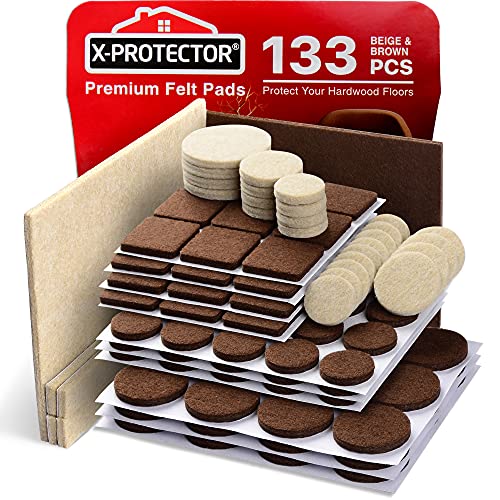
Felt Furniture Pads X-PROTECTOR 133 PCS Premium Furniture Pads – Felt Pads Furniture Feet Best Wood Floor Protectors – Protect Your Hardwood & Laminate Flooring! Brown and Beige
- Floor Protection for Various Surfaces: Protects wood, laminate, and tile floors
- Includes Two-Pack Offer: 1 brown pack + 1 beige pack
- Multiple Sizes for Versatility: Various sizes to fit all furniture
As an affiliate, we earn on qualifying purchases.
As an affiliate, we earn on qualifying purchases.
Conclusion
In the grand tapestry of your floor, scuffs are mere whispers, while transfer marks are fleeting shadows, easily brushed away. Real floor damage, however, is a storm cloud, dark and intimidating, leaving a lasting imprint. Understanding these differences lets you dance through your space, knowing when to polish and when to repair. So, keep your floors gleaming like sunlit waters, and don’t let trivial marks dim their shine!

Bona Multi-Surface Floor Cleaner Spray – 32 fl oz – Lemon Mint Scent
- Residue-free, fast-drying formula: Removes dust, dirt, grime for shine
- Easy to use spray and mop: Quick cleaning with simple steps
- Compatible with Bona refills: Use with economy-size or concentrate refills
As an affiliate, we earn on qualifying purchases.
As an affiliate, we earn on qualifying purchases.

Rejuvenate All Floors Restorer Fills Scratches, Shines And Protects All Floor Types, Including Hardwood, Laminate, Vinyl And Tile, 32 Ounces
- Floor Compatibility: Suitable for all floor types including hardwood, laminate, vinyl, and tile
- Easy Application: Single coat fills scratches, adds shine, and protects
- Long-Lasting Protection: Revitalizes floors with durable, revitalizing formula
As an affiliate, we earn on qualifying purchases.
As an affiliate, we earn on qualifying purchases.