To cut down on floor allergens without strong chemicals, vacuum regularly using a HEPA filter to trap tiny particles. You should also clean hard surfaces with a mixture of white vinegar and water. Sprinkle baking soda on carpets to absorb odors and allergens before vacuuming it up. Maintain low humidity levels to prevent mold growth and prioritize good air circulation. These simple steps can greatly improve your indoor air quality, and there’s more you can do!

Get cleaning gear delivered free — and shop member deals
- Fast, free delivery on millions of items
- Access to Prime Big Deal Days deals on October 6–7
- Prime Video, Amazon Music and more included
Key Takeaways
- Vacuum at least twice a week with a HEPA filter to effectively trap allergens and dust particles.
- Use a vinegar and water solution for cleaning hard surfaces, avoiding harsh chemicals.
- Regularly wash machine-washable rugs and mats to eliminate trapped allergens.
- Control humidity levels with a dehumidifier to prevent mold growth and reduce allergens.
- Ensure proper ventilation to disperse airborne allergens and maintain air quality.
If you want to breathe easier in your home, cutting down on floor allergens is crucial. It’s not just about keeping your space tidy; it’s about creating a healthier environment for you and your family. Dust, pet dander, and other allergens tend to settle into your floors, so tackling them effectively can make a significant difference. You can achieve this without relying on strong chemicals, which is a win for both your health and the planet.
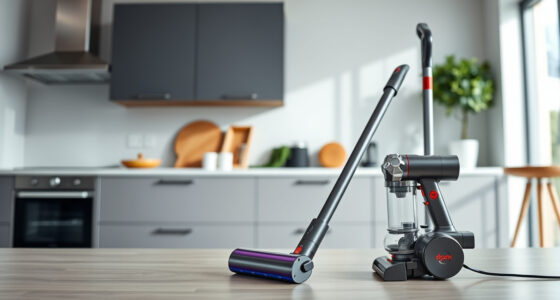
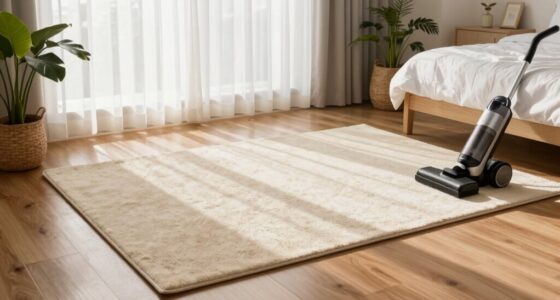
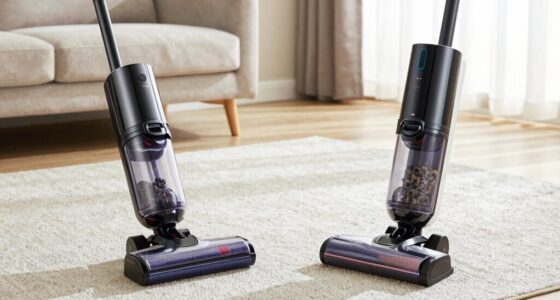
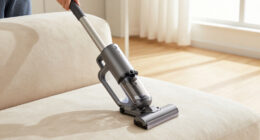
Start by adopting effective vacuum techniques. Not all vacuums are created equal, so choose one equipped with a HEPA filter. These filters trap tiny particles that regular vacuums might miss, ensuring you’re not just spreading dust around. When you vacuum, make sure you’re thorough; don’t rush through the process. Move furniture if necessary, and vacuum in multiple directions to lift the dust that clings to fibers. Consider vacuuming at least twice a week, especially in high-traffic areas where allergens accumulate quickly. Using a vacuum with a HEPA filter can significantly improve your indoor air quality by trapping microscopic particles. Additionally, maintaining proper ventilation can help reduce indoor allergen buildup by promoting fresh airflow. Proper air circulation is essential for dispersing airborne allergens and preventing them from settling. Incorporating air quality awareness into your routine can help you better understand and manage allergen levels in your home environment.
Adopt effective vacuum techniques with a HEPA filter, and vacuum thoroughly to capture allergens from your floors.
Next, pay attention to the type of cleaning products you use. The good news is that you can opt for natural cleaners that effectively eliminate allergens without harsh chemicals. For example, a simple mixture of white vinegar and water can work wonders on hard surfaces. Spray it on your floors and wipe them down with a microfiber cloth; this combo not only cleans but also helps break down any allergens lingering on the surface. Baking soda is another excellent natural cleaner; sprinkle it on carpets or rugs, let it sit for about 15 minutes, and then vacuum it up. This technique helps absorb odors and can lift away some allergens, too. Regular cleaning routines that focus on airborne allergen reduction can further enhance your home’s air quality. Remember, consistent cleaning can prevent the buildup of allergens and improve your overall indoor environment.
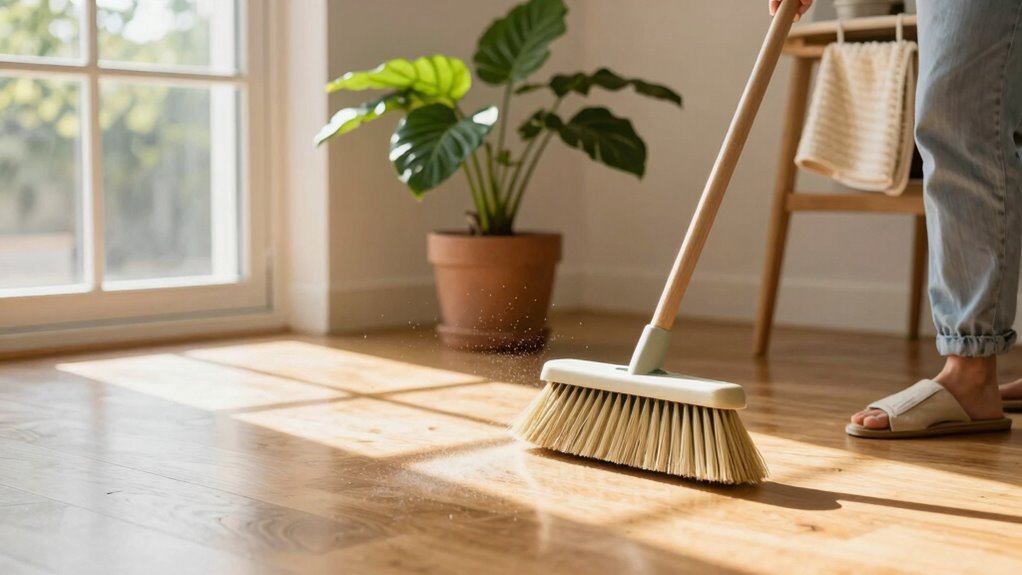
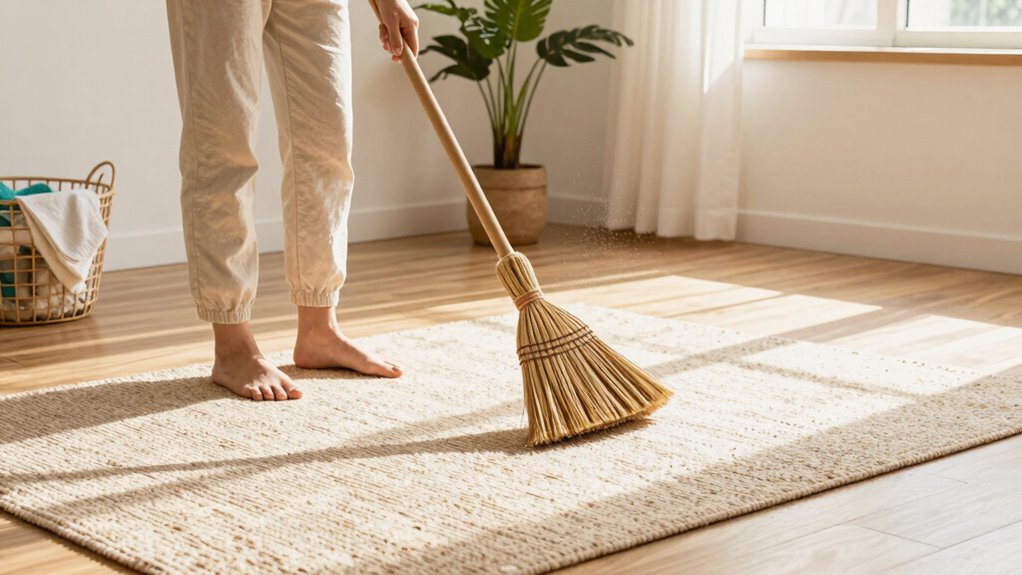
Don’t forget about your mats and rugs. They can trap a lot of dust and allergens, so it’s essential to clean them regularly. If possible, shake them outside or beat them to dislodge dust before vacuuming. If you’re using machine-washable rugs, toss them in the washer to keep them fresh and allergen-free. Regularly washing and cleaning these items helps eliminate trapped allergens, contributing to a healthier home.
Finally, consider the humidity levels in your home. High humidity can encourage mold growth, which is another allergen. Use a dehumidifier if necessary to maintain a balanced environment. By combining effective vacuum techniques with natural cleaners and smart humidity control, you’ll create a healthier home that allows you to breathe easier.
As an affiliate, we earn on qualifying purchases.
Frequently Asked Questions
How Often Should I Wash My Rugs and Carpets?
You should wash your rugs and carpets every 1 to 3 months, depending on the carpet types and foot traffic in your home. For high-traffic areas, more frequent cleaning is essential to maintain good rug maintenance. If you have pets or allergies, consider washing them every month. Regular vacuuming also helps reduce allergens. Keep an eye on stains or spills, and clean them promptly to prevent buildup and maintain their appearance.
Can I Use Essential Oils for Cleaning?
Using essential oils for cleaning is like adding a refreshing change to your home. They offer numerous essential oil benefits, such as antibacterial properties and pleasant scents. You can mix oils like tea tree or lavender with water for a natural cleaning alternative that’s effective and safe. Just remember to test a small area first, ensuring your surfaces react well. You’ll enjoy a cleaner, more invigorating space without harsh chemicals!
What Are the Best Vacuum Settings for Allergens?
To tackle allergens effectively, use a vacuum with a HEPA filter. Set it to the highest suction for carpets and a lower setting for hard floors to avoid scattering dust. Regular vacuum maintenance is essential—check filters and brushes frequently. If you have pets, increase your cleaning frequency to at least twice a week to manage pet dander. This approach helps keep your home cleaner and reduces allergens effectively.
Are Hardwood Floors Better for Allergies Than Carpets?
Imagine walking through a serene forest, where the air feels fresh and light. That’s how hardwood floors can transform your home. They’ve got hardwood benefits like easy cleaning and fewer allergens, unlike carpets, which trap dust and pet dander, creating a breeding ground for allergens. By choosing hardwood, you embrace a healthier environment, making it easier to breathe and enjoy your space without the drawbacks that carpets often bring.
How Can I Reduce Dust Mites in Bedding?
To reduce dust mites in your bedding, start by choosing hypoallergenic bedding materials. Use mattress protectors that are specifically designed to block allergens. Wash your sheets and pillowcases weekly in hot water to kill any mites. Consider using a vacuum with a HEPA filter on your mattress and pillows. Regularly cleaning your bedroom and keeping humidity low will also help keep those pesky dust mites at bay.
natural floor cleaner vinegar water
As an affiliate, we earn on qualifying purchases.
As an affiliate, we earn on qualifying purchases.
Conclusion
By embracing natural cleaning methods, you’re not just clearing dust and allergens; you’re cultivating a sanctuary within your home. Think of your floors as a canvas; with each sweep and gentle scrub, you’re painting a healthier environment for yourself and your loved ones. Let the absence of harsh chemicals symbolize a refreshing change, inviting peace and comfort into your space. In this nurturing atmosphere, you’re not just living—you’re thriving.
As an affiliate, we earn on qualifying purchases.
home dehumidifier for mold prevention
As an affiliate, we earn on qualifying purchases.
As an affiliate, we earn on qualifying purchases.
Fall Picks
fall essentials
As an affiliate, we earn on qualifying purchases.