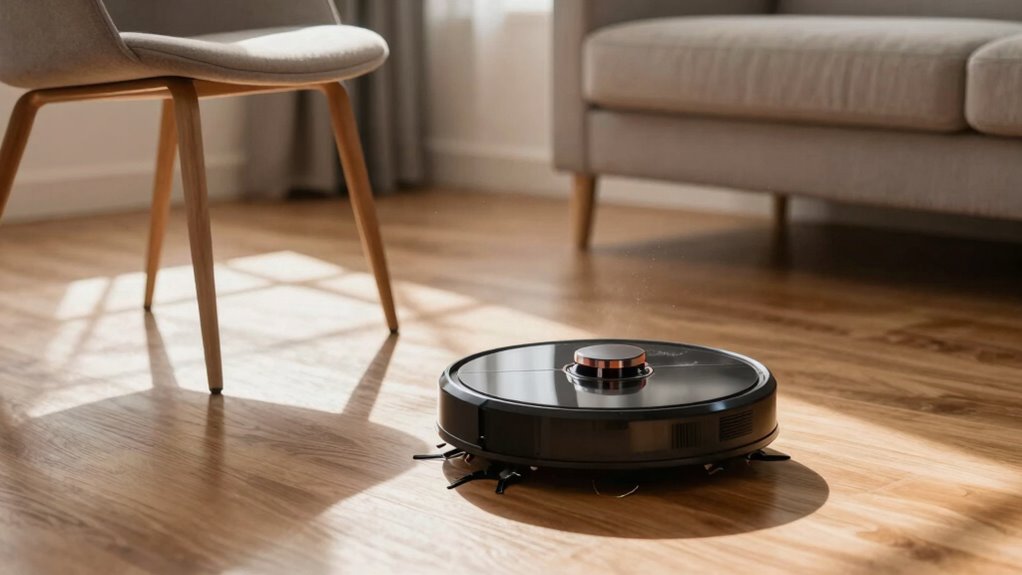
Robot vacuums often miss chair legs because their advanced sensors struggle with thin or color-blending designs. These limitations can cause them to overlook corners and furniture edges, leading to missed spots in your cleaning routine. Additionally, busy floor patterns may confuse the vacuum’s routing algorithms, making it difficult to navigate around obstacles. If you’re curious about how to improve your vacuum’s performance and minimize those missed areas, there are some handy tips to contemplate.

Get cleaning gear delivered free — and shop member deals
- Fast, free delivery on millions of items
- Access to Prime Big Deal Days deals on October 6–7
- Prime Video, Amazon Music and more included
Key Takeaways
- Robot vacuums often overlook thin or color-blending chair legs due to sensor limitations, leading to missed cleaning areas.
- Routing algorithms can misinterpret chair leg spacing, causing vacuums to struggle with navigation and resulting in ineffective cleaning.
- Low chair legs may go undetected, leading to vacuums bumping into furniture instead of maneuvering smoothly around them.
- Busy patterns on rugs complicate obstacle detection, further hindering a vacuum’s ability to identify chair legs accurately.
- Adjusting furniture layout and choosing robot-friendly designs can significantly enhance vacuum navigation and cleaning efficiency.
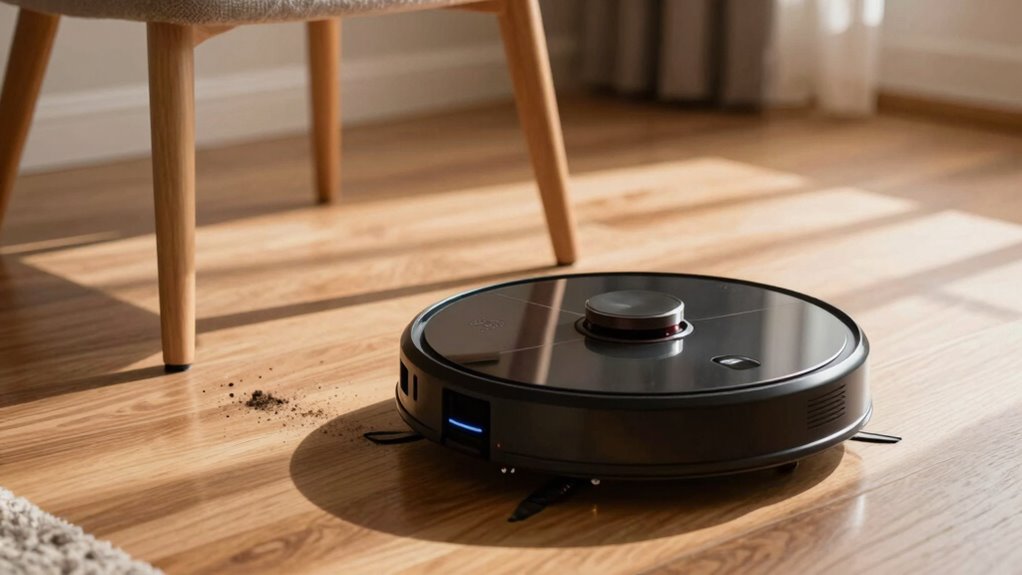
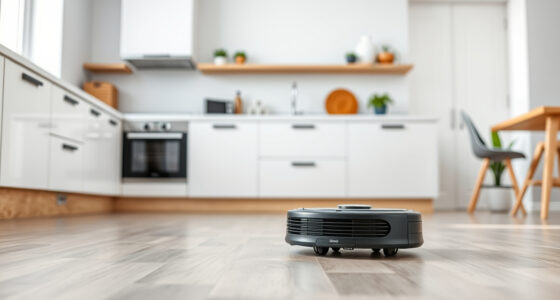
As you maneuver through the world of robot vacuums, you might not realize how easily they can get tangled up with chair legs. These seemingly innocuous pieces of furniture can pose a significant challenge for your cleaning assistant. The real reason robot vacuums miss chair legs often boils down to their sensor technology and routing algorithms, which aren’t always foolproof.
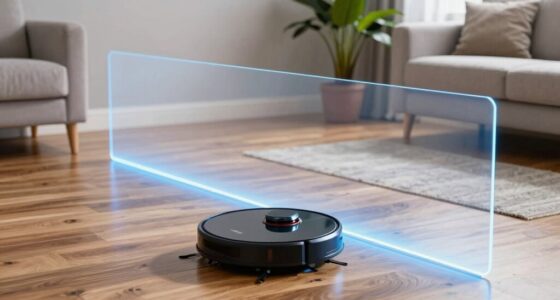
Most robot vacuums come equipped with advanced sensor technology designed to detect obstacles and adjust their cleaning paths. However, chair legs can be tricky. If they’re too thin or have a color that blends into the floor type, the sensors might overlook them entirely. This can lead to missed areas during your vacuuming session, ultimately affecting your cleaning efficiency. You might notice that those dusty corners around your dining set remain untouched, all because the vacuum simply didn’t register the chair legs as an obstacle.
The routing algorithms in these devices play a vital role as well. They determine how the vacuum maneuvers through your home, mapping out the layout based on detected obstacles. If the algorithms struggle to interpret the chair legs correctly, the vacuum may either get stuck or fail to clean effectively. This is especially true with certain floor types. For example, if you’ve got a busy pattern on a rug, the vacuum may have difficulty distinguishing between the rug and the legs of your chairs, leading to more missed spots.
Furniture design can also complicate matters. Some chairs might have legs that are set far apart, creating a wider space that confuses the vacuum’s sensors. Additionally, if the legs are too low to the ground, the vacuum might not even see them, resulting in it bumping into the furniture rather than effectively maneuvering around it. This not only frustrates you but also diminishes the vacuum’s ability to perform a thorough job.
You might find that adjusting your furniture arrangement helps mitigate some of these issues. By spacing out chairs or choosing designs that are more robot-friendly, you can enhance the effectiveness of your vacuum. Ultimately, understanding the interplay between sensor technology, routing algorithms, and furniture design can help you optimize your cleaning routine and guarantee that your robot vacuum doesn’t miss those pesky chair legs again.
robot vacuum obstacle detection sensors
As an affiliate, we earn on qualifying purchases.
As an affiliate, we earn on qualifying purchases.
Frequently Asked Questions
How Do Robot Vacuums Detect Obstacles in Their Path?
Robot vacuums detect obstacles in their path using advanced sensor technology. These sensors scan the environment, identifying objects like furniture and walls. When they encounter an obstacle, the vacuum employs obstacle avoidance algorithms to navigate around it. You’ll notice that as it approaches a chair leg, it slows down and changes direction to avoid collisions. This technology helps guarantee efficient cleaning while protecting your furniture from damage.
Can Robot Vacuums Navigate Different Floor Types?
Yes, robot vacuums can navigate different floor types effectively. They use floor sensors to detect changes in surface compatibility, allowing them to shift smoothly from carpets to hard floors. These sensors help the vacuum adjust its cleaning mode, ensuring peak performance on each surface. So, whether you’ve got hardwood, tile, or carpet, your robot vacuum’s equipped to handle it, keeping your home clean with ease and efficiency.
Do Robot Vacuums Require Regular Maintenance?
Yes, robot vacuums require regular maintenance to keep them running efficiently. You should replace the filter every few months to guarantee peak suction. Additionally, don’t forget about battery care; it’s important to charge the vacuum regularly and avoid letting the battery completely deplete. Cleaning the brushes and sensors also helps maintain performance. By staying on top of these tasks, you’ll extend your robot vacuum’s lifespan and improve its cleaning capabilities.
How Long Do Robot Vacuums Typically Last?
Robot vacuums typically last around 3 to 5 years, but don’t you wish they came with a “forever” option? As their battery lifespan dwindles, you might notice a performance decline, turning your trusty helper into a reluctant sloth. Regular maintenance can help prolong their life, but it’s like feeding a pet that only cleans up after itself. So, keep an eye on that battery, or your vacuum might just retire early!
Are Robot Vacuums Effective on Pet Hair?
Yes, robot vacuums are generally effective on pet hair, especially if you choose one designed for it. Their cleaning efficiency can vary, but models with strong suction and specialized brushes handle pet hair well. Regular maintenance, like emptying the bin and cleaning the brushes, helps maintain their performance. Just make sure to select a vacuum with features that suit your home and your pets’ shedding habits for the best results.
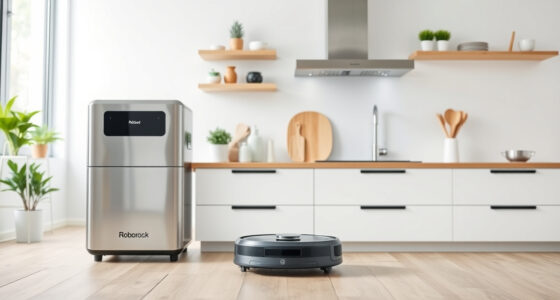
best robot vacuum for chair legs
As an affiliate, we earn on qualifying purchases.
As an affiliate, we earn on qualifying purchases.
Conclusion
In the end, robot vacuums miss chair legs because of their design and the limits of their technology. They struggle with obstacles, they rely on sensors, and they often underestimate the space around them. Understanding these quirks helps you navigate your cleaning routine more effectively. By adjusting your furniture or setting up barriers, you can enhance their efficiency. Embrace the quirks, adapt your space, and enjoy a cleaner home with your trusty robotic helper.
robot vacuum with advanced navigation
As an affiliate, we earn on qualifying purchases.
As an affiliate, we earn on qualifying purchases.
robot vacuum for low furniture clearance
As an affiliate, we earn on qualifying purchases.
As an affiliate, we earn on qualifying purchases.
Halloween Picks
halloween
As an affiliate, we earn on qualifying purchases.