Using essential oils on floors can be safe if you dilute them properly and apply carefully. Avoid using concentrated oils directly on surfaces, as they can make floors slippery and cause damage, especially on wood or laminate. Make certain you use only a few drops per bucket of water and dry the floors thoroughly afterward. If you want to learn more about proper techniques and safety tips, there’s important information you’d want to explore.

Get cleaning gear delivered free — and shop member deals
- Fast, free delivery on millions of items
- Access to Prime Big Deal Days deals on October 6–7
- Prime Video, Amazon Music and more included
Key Takeaways
- Always dilute essential oils before applying to floors to prevent slipperiness and damage.
- Test solutions on small areas first, especially for sensitive flooring like hardwood or laminate.
- Properly dilute and thoroughly dry floors after cleaning to minimize slip hazards.
- Use on suitable surfaces such as tile or vinyl, avoiding excess moisture on hardwood or laminate.
- Store essential oils safely away from children and pets to prevent accidental ingestion or contact.

Using essential oils on floors can be a natural way to freshen your home and promote a healthier environment. Many people turn to scented cleaning methods to avoid harsh chemicals found in conventional products, and essential oils offer an appealing alternative. When applied properly, they can leave your floors smelling fresh and clean while potentially providing antimicrobial benefits. However, there are important safety considerations you need to keep in mind to prevent accidents and ensure your home remains safe for everyone.
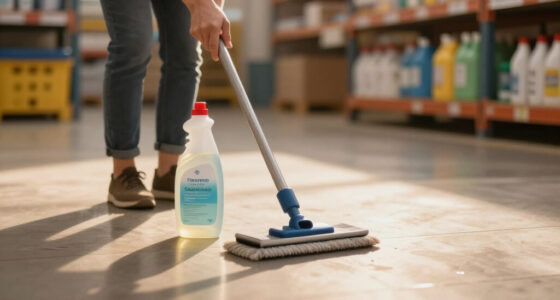
One common concern when using essential oils on floors is the risk of creating slip hazards. Many oils, especially when not diluted properly, can make surfaces slick and increase the chance of slips and falls. For example, oils like peppermint or citrus are popular for their invigorating scents, but if added directly to mopping solutions without proper dilution, they can leave a slippery residue. To avoid this, always dilute essential oils in water or a carrier solution before applying. Use a small amount—just a few drops per bucket of water—and make sure to mop thoroughly, allowing the surface to dry completely before walking on it. This not only helps maintain the scented cleaning effect but also keeps your floors safe and slip-free. Proper dilution and thorough drying are essential to prevent hazards and maintain a safe environment.
Dilute essential oils properly to prevent slippery floors and ensure safety.
Another point to contemplate is the type of flooring you have. Some surfaces, like hardwood or laminate, can be sensitive to certain oils or overuse of any liquid cleaners. Excess moisture or harsh oils can damage the finish or cause warping over time. For these floors, use a gentle, diluted solution and test a small, inconspicuous area first. For tile or vinyl flooring, a diluted essential oil mixture is generally safe, but again, ensure the surface dries fully to prevent any residual slipperiness.
It’s also wise to be mindful of pets and children. Some essential oils can be toxic if ingested or if they come into contact with skin, especially in concentrated forms. Keep your cleaning solutions out of reach and avoid using oils that are known irritants or harmful to animals during floor cleaning. Proper storage and cautious application help prevent accidental ingestion or exposure. Being informed about the safety of essential oils and their proper use is crucial to protect everyone in your home.
As an affiliate, we earn on qualifying purchases.
Frequently Asked Questions
Can Essential Oils Damage Hardwood Floors Over Time?
Yes, essential oils can damage hardwood floors over time if they’re not diluted or used improperly. They may break down the wood finish, leading to surface damage and discoloration. To protect your floors, always dilute essential oils with a carrier oil or water, and avoid pouring them directly onto the wood. Regular cleaning with proper solutions helps prevent long-term damage and keeps your hardwood looking great.
Are Some Essential Oils Better Suited for Laminate Flooring?
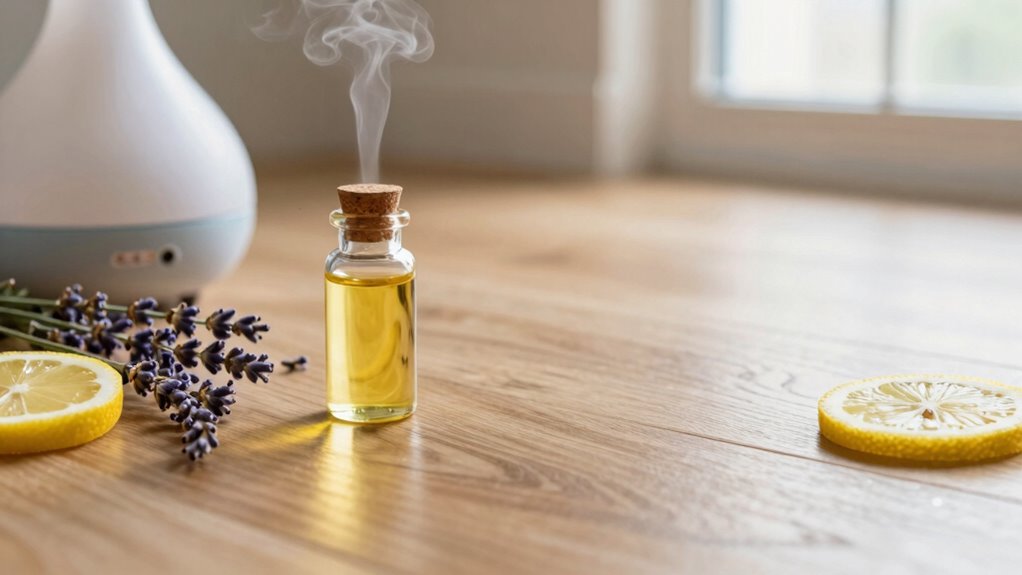
Some essential oils are better suited for laminate flooring because they are less likely to cause damage. The best essential oils for laminate flooring include those with mild, natural scents like lavender, lemon, and tea tree oil. You should always dilute these oils properly and avoid using harsh or concentrated formulas. This way, you can enjoy the benefits of essential oils without risking harm to your laminate flooring.
How Do I Remove Essential Oil Stains From Floors?
You accidentally spill essential oils on your floor, and now you’re wondering how to remove the stain. Start with gentle stain removal by blotting the area with a soft cloth to lift excess oil. Then, clean with a mixture of mild dish soap and warm water, following cleaning tips to avoid damage. For stubborn stains, repeat the process, ensuring you don’t scrub too hard, which could harm your flooring.
Is It Safe to Use Essential Oils Around Pets on Floors?
Using essential oils around pets on floors can be risky if you’re not careful. Some oils, especially citrus or tea tree, may harm your pet’s health during oil diffusing or if they come into contact with treated surfaces. Always prioritize pet safety by avoiding direct application on floors or areas pets frequent, and guarantee good ventilation. When in doubt, consult a vet before using essential oils in pet areas.
Can Essential Oils Cause Slipping Hazards on Tiled Floors?
Yes, essential oils can create slip hazards on tiled floors if they are spilled or not properly diluted. Oils make surfaces slippery, increasing the risk of falls and compromising floor safety. To prevent accidents, clean up any spills immediately and avoid applying oils directly to the floor. Using them cautiously guarantees you maintain a safe environment without compromising slip hazards or overall floor safety.
diluted essential oils for mopping
As an affiliate, we earn on qualifying purchases.
As an affiliate, we earn on qualifying purchases.
Conclusion
Just like a gentle rain revitalizes the earth, using essential oils on floors can brighten your space if done safely. However, remember that too much or the wrong type can lead to slipping or damage—like a storm brewing on the horizon. Always dilute and test first, keeping safety in mind. With mindful use, you can create a fresh, inviting atmosphere that’s as soothing as a peaceful garden in full bloom.
As an affiliate, we earn on qualifying purchases.
As an affiliate, we earn on qualifying purchases.
Evergreen bestsellers Picks
bestsellers
As an affiliate, we earn on qualifying purchases.