
To reduce musty basement smells, start by monitoring your humidity levels with a hygrometer and keep it between 30-50%. Use a properly sized dehumidifier to remove excess moisture and place it centrally for maximum efficiency. Regularly empty or drain the tank, and maintain the unit for peak performance. Improve ventilation and fix leaks promptly to prevent dampness. If you want practical tips on moisture control and mold prevention, you’re about to discover more effective strategies.

Get cleaning gear delivered free — and shop member deals
- Fast, free delivery on millions of items
- Access to Prime Big Deal Days deals on October 6–7
- Prime Video, Amazon Music and more included
Key Takeaways
- Use a properly sized dehumidifier to maintain indoor humidity between 30-50%.
- Regularly empty or drain the dehumidifier to ensure continuous moisture removal.
- Monitor basement humidity levels with a hygrometer for effective humidity control.
- Improve ventilation with exhaust fans or vents to reduce dampness and stale air.
- Address water leaks and waterproof walls to prevent excess moisture and mold growth.

If your basement smells musty, dehumidification is often the most effective solution. The musty odor usually comes from excess moisture that encourages mold growth and mildew buildup, both of which contribute to that unpleasant smell. To combat this, focusing on mold prevention and humidity control can make a notable difference. When you reduce humidity levels in your basement, you create an environment less hospitable for mold and mildew, helping to eliminate the source of the smell at its core.
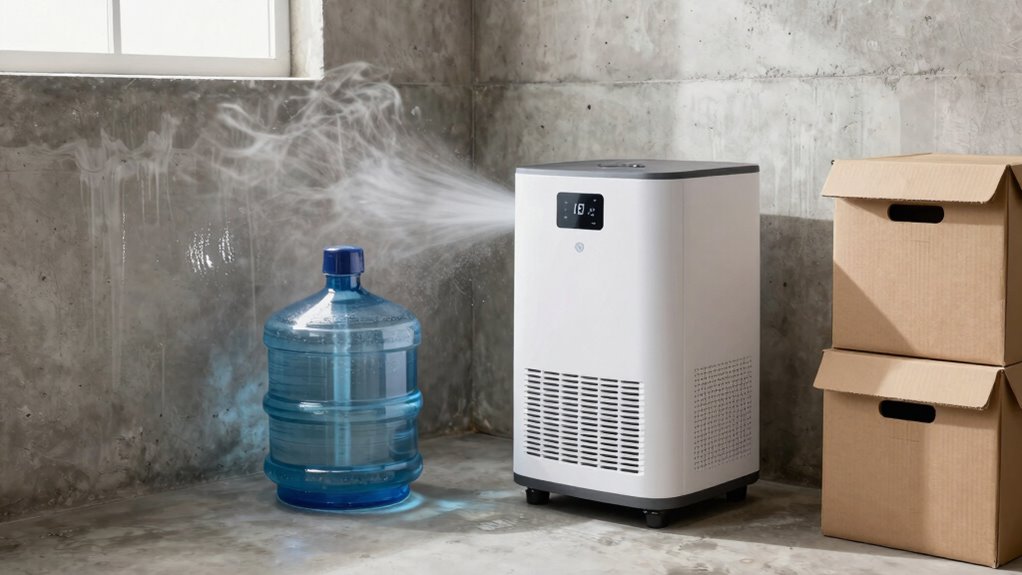
Start by evaluating the current humidity level in your basement. A hygrometer can give you an accurate reading; ideally, indoor humidity should stay between 30-50%. If it’s higher, then you know it’s time to take action. Using a dehumidifier is your best bet for maintaining consistent humidity control. Choose a unit appropriately sized for your space to ensure effective moisture removal. When you run the dehumidifier regularly, it prevents the buildup of excess moisture, which is the primary cause of musty odors. Keep the appliance in a central location where it can circulate air efficiently, and empty the collection tank frequently or connect it to a drain if possible. Regular maintenance of your dehumidifier can help prevent malfunctions and ensure optimal performance.
Evaluate humidity levels with a hygrometer and use a properly sized dehumidifier for effective moisture control.
In addition to using a dehumidifier, improve ventilation to allow fresh air to replace stale, moisture-laden air. Proper airflow helps prevent dampness from lingering, reducing mold growth potential. Consider installing exhaust fans or vents if your basement lacks sufficient airflow. Also, address any existing leaks or water intrusion issues promptly, as these are common sources of excess moisture that undermine your humidity control efforts. Waterproofing your basement walls and sealing cracks can make a notable difference in keeping moisture out. Maintaining proper humidity levels is essential for mold prevention and overall basement health. Regularly monitoring humidity levels and addressing issues promptly can help prevent mold growth from developing in the first place. Remember that moisture control is an ongoing process, requiring consistent attention to keep your basement dry and odor-free.
Adding adequate insulation can also help regulate temperature fluctuations that lead to condensation and increased moisture. Ensuring proper ventilation is crucial for maintaining a dry environment and reducing indoor moisture. For ongoing mold prevention, clean your basement regularly with mold-inhibiting solutions, especially in corners and hidden spots where moisture tends to collect. Keep furniture and stored items off the floor to promote air circulation, and avoid creating damp pockets of clutter. If you notice persistent odors despite these measures, examine your dehumidifier for proper functioning, and consider supplementing with an air purifier designed to trap mold spores and other airborne contaminants. By consistently managing humidity and maintaining a dry environment, you’ll greatly reduce the chances of mold growth, preventing future musty smells and creating a healthier basement space.
As an affiliate, we earn on qualifying purchases.
Frequently Asked Questions
How Often Should I Run My Dehumidifier in the Basement?
You should run your dehumidifier daily until moisture levels are consistently below 50%, then reduce usage to maintain air circulation and prevent mold. Check your basement’s humidity regularly, especially after rain or high humidity days. Keep the dehumidifier running long enough to dry out the air, but don’t overuse it. Adjust based on moisture levels, ensuring good air circulation to keep your basement fresh and odor-free.
Can Dehumidifiers Eliminate All Basement Odors Permanently?
Think of your dehumidifier as a vigilant guard, but even the best guard can’t watch forever. It can substantially reduce basement odors through odor absorption and mold prevention, but it might not eliminate all smells permanently. Persistent sources like hidden mold or leaks require additional measures. Regular maintenance and cleaning help, yet for total odor removal, consider thorough approaches alongside dehumidification.
Are There Specific Dehumidifier Features Best for Musty Smells?
Yes, certain dehumidifier features help combat musty smells effectively. Look for models with high dehumidifier capacity to remove moisture quickly, preventing mold growth. Choose units with efficient air filters that trap mold spores, dust, and odors, improving air quality. An adjustable humidistat also helps maintain ideal humidity levels, reducing musty smells over time. These features work together to keep your basement fresh and odor-free.
How Do I Maintain My Dehumidifier for Optimal Performance?
Think of your dehumidifier as a trusty garden hose—if it’s clogged, water can’t flow freely. To keep it humming, regularly clean or replace the filter to prevent dust buildup, and check the drainage system to avoid leaks. Drainage tips include emptying the water bucket often or setting up a continuous drain. With proper maintenance, your dehumidifier will run smoothly, banishing musty odors and keeping your basement fresh.
Is Dehumidification Safe for All Basement Environments?
Dehumidification is generally safe for all basement environments, but you should monitor the humidity levels closely. Keeping basement humidity between 30-50% helps prevent mold growth and reduces musty odors. If your basement has high humidity or existing mold issues, guarantee proper ventilation and use a dehumidifier rated for your space. Regular maintenance and moisture control are key for safe, effective mold prevention and a healthier basement environment.
hygrometer for humidity monitoring
As an affiliate, we earn on qualifying purchases.
As an affiliate, we earn on qualifying purchases.
Conclusion
By using dehumidification, you can effectively combat musty basement odors and create a fresher, healthier space. Remember, keeping humidity levels below 60% can reduce mold growth, which causes those unpleasant smells. In fact, studies show that homes with controlled humidity levels experience 50% fewer mold-related issues. So, invest in a good dehumidifier, monitor humidity regularly, and enjoy a cleaner, more comfortable basement environment. Your nose—and your home—will thank you!
As an affiliate, we earn on qualifying purchases.
As an affiliate, we earn on qualifying purchases.
Fall Picks
fall essentials
As an affiliate, we earn on qualifying purchases.