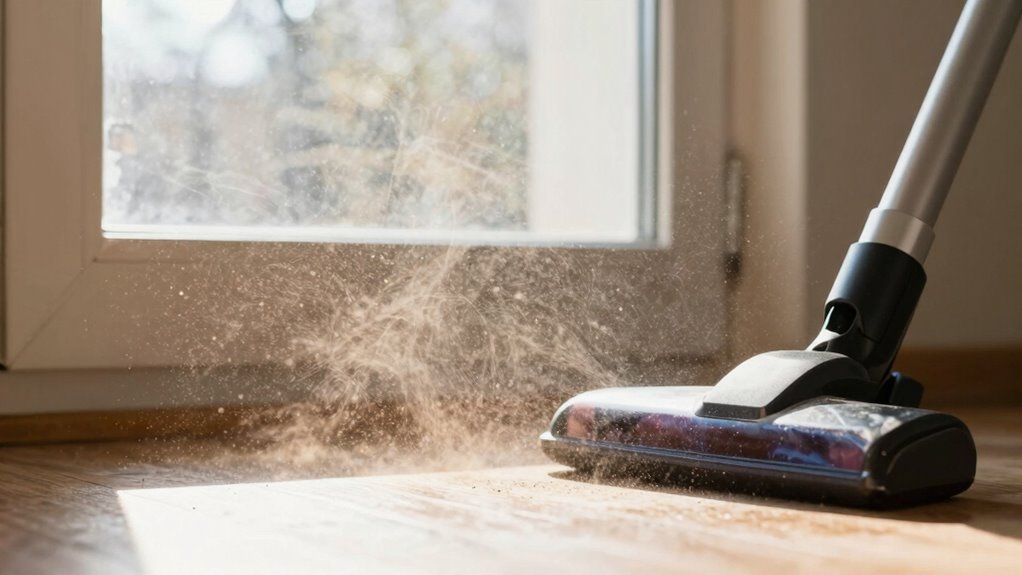
Dust can become airborne after vacuuming if airflow disrupts settled particles, seals are poor, or filters aren’t working properly. To reduce blowback, prepare your space by sealing vents and clearing clutter, vacuum slowly with a well-maintained, HEPA-filtered machine, and make certain all seals are tight. Using equipment with good filtration and proper techniques helps contain dust. Keep these tips in mind, and you’ll discover more ways to keep the air cleaner during your cleaning routine.
Key Takeaways
- Use vacuums equipped with high-quality HEPA filters to trap airborne dust particles effectively.
- Vacuum slowly and methodically to prevent disturbing settled dust and causing blowback.
- Seal vents, windows, and leaks in hoses to contain dust and improve airflow control during cleaning.
- Regularly maintain and replace filters and check for equipment malfunctions to ensure proper dust containment.
- Prepare the space by dusting surfaces beforehand and removing clutter to minimize dust resuspension during vacuuming.
Why Does Dust Blow Back After Vacuuming? Causes Explained

Dust often blows back after vacuuming because the process can stir up particles that weren’t fully captured. Poor air circulation in your space allows dust to resettle and become airborne again. When you vacuum, airflow disrupts settled dust, causing it to lift into the air. Static buildup also plays a role; as surfaces and carpets become charged, they attract dust particles. When disturbed, these particles are released back into the environment instead of staying contained. Additionally, if your vacuum isn’t sealing properly or has filters that aren’t functioning well, dust can escape during operation. All these factors combine to make dust resurface after vacuuming, creating the impression that the cleaning didn’t work. Improving air circulation and managing static can notably reduce this blowback. Incorporating energy-efficient tools and ensuring proper filtration can further minimize dust escape during cleaning. Using air purifiers can also help remove airborne dust particles that resurface after vacuuming, enhancing overall cleanliness. Optimizing vacuum maintenance and choosing models with superior sealing can also significantly reduce dust blowback during cleaning. Moreover, considering the use of specialized air circulation systems can help control dust movement in your environment.
Quick Tips to Stop Dust From Blowing up During Vacuuming

To prevent dust from blowing up during vacuuming, start by ensuring your vacuum has a good seal and functioning filters. A tight seal keeps dust contained, preventing it from escaping back into the air, which improves air quality. Regularly clean or replace filters to maintain ideal filtration, reducing airborne dust and minimizing dust accumulation on surfaces. Use a vacuum with adjustable suction settings to avoid disturbing dust too forcefully, which can cause blowback. Always vacuum slowly and methodically, especially around heavily dust-laden areas. Check for leaks or cracks in hoses and attachments, sealing any gaps. Proper air filtration is essential for reducing dust blowback, especially during extensive cleaning sessions. Additionally, understanding the dust containment features of your vacuum can help you select the most effective model for your needs. Maintaining a well-sealed vacuum system can also prevent dust escape, ensuring cleaner air during and after cleaning. Ensuring your vacuum’s filter efficiency aligns with manufacturer recommendations can significantly improve dust containment. Using vacuums with advanced filtration systems can further minimize dust blowback and improve indoor air quality. These quick tips help keep dust contained during cleaning, resulting in better air quality and less dust accumulation afterward.
How to Choose the Best Vacuum for Reducing Dust

When selecting a vacuum to reduce dust, focus on models with effective HEPA filters that trap tiny particles. Make sure it has the right balance of suction power—strong enough to clean thoroughly but not so powerful that it stirs up dust. Additionally, check for good sealing and filtration quality to prevent dust from escaping back into the air. For added efficiency, consider vacuums that incorporate energy-efficient features, which can help reduce ongoing operational costs and minimize dust blowback. A well-designed vacuum can also benefit from understanding the off-road top speeds of various equipment, ensuring optimal performance in challenging environments. Incorporating filter maintenance practices is essential to maintain the vacuum’s effectiveness over time, especially when dealing with Free Floating particles that can be difficult to contain.
HEPA Filter Effectiveness
Choosing a vacuum with a HEPA filter is one of the most effective ways to reduce airborne dust particles. HEPA filters trap tiny particles, preventing them from recirculating into the air. To maximize their effectiveness, focus on airflow patterns; a well-designed airflow directs dust into the filter efficiently. Proper airflow management ensures dust is effectively drawn into the filter, reducing blowback. Regular filter maintenance is essential—clean or replace filters as recommended to prevent clogging, which can compromise performance. When selecting a vacuum, consider these factors:
- The filter’s ability to capture particles as small as 0.3 microns
- Ease of filter access for routine maintenance
- Compatibility with your cleaning needs and airflow design
- The filter’s dust-trapping capacity and overall efficiency. Investing in a vacuum with a powerful suction system can also improve dust pickup and reduce residual particles. Additionally, choosing a vacuum with a high-quality HEPA filter ensures optimal dust containment during cleaning, especially when combined with proper airflow patterns that direct dust into the filter efficiently. Incorporating filter maintenance routines enhances overall performance and prolongs the lifespan of your vacuum.
Suction Power Balance
Achieving the right suction power is essential for effectively reducing airborne dust without causing blowback or dispersing particles into the air. A proper suction power balance ensures you clean thoroughly without overwhelming the airflow, which can stir up dust instead of containing it. Look for vacuums with adjustable suction settings, allowing you to optimize airflow for different surfaces and debris types. Too much suction can cause dust to escape back into the air, while too little may leave dust behind. Prioritize models that enable airflow optimization, helping you maintain consistent suction without disturbing settled dust. By fine-tuning these settings, you can maximize cleaning efficiency and minimize the risk of airborne dust after vacuuming. Additionally, understanding filtration systems can significantly impact how well your vacuum traps dust and prevents blowback. Selecting a vacuum with high-quality HEPA filters can further reduce dust escape and improve indoor air quality. Being aware of airflow dynamics can also assist you in choosing a vacuum that effectively manages dust without excessive disturbance. Furthermore, choosing a vacuum with well-designed air pathways can help control dust dispersion during use. Proper calibration of the vacuum’s airflow can also enhance overall dust containment and cleaning effectiveness.
Seal and Filtration Quality
How well your vacuum contains dust largely depends on its seal and filtration system. Good seal integrity prevents dust from escaping back into the air, while high filter quality captures fine particles. To ensure peak performance, look for vacuums with:
- Robust, airtight seals around doors and attachments
- HEPA filters that trap 99.97% of particles 0.3 microns or smaller
- Easily replaceable filters that maintain consistent filter quality
A well-designed seal minimizes blowback, and superior filter quality reduces airborne dust. These features work together to keep dust contained and improve indoor air quality. Prioritize vacuums with proven Seal integrity and reliable filters to achieve cleaner, healthier spaces after each cleaning session. Additionally, choosing a vacuum with advanced filtration technology can further enhance dust containment and air purity.
Preparing Your Space to Minimize Dust Clouds
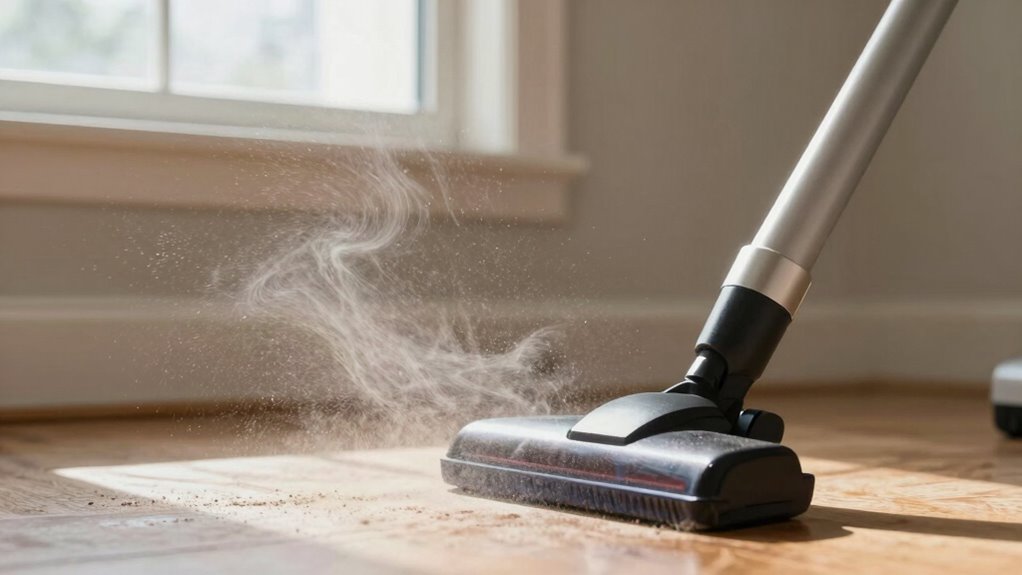
Before you start vacuuming, clear away clutter to prevent dust from scattering. Seal off vents or windows to keep dust contained and avoid spreading. Use damp cloths to dust surfaces, reducing airborne particles during cleanup.
Clear Clutter First
Clearing clutter before you start vacuuming is essential for minimizing dust clouds and making the cleaning process more effective. When you remove items like clothes, papers, or small objects, you prevent them from scattering dust and debris, which can compromise air quality. Plus, it allows your vacuum to work more efficiently, reducing the need for repeated passes and potential blowback. To streamline this step, consider:
- Creating a designated spot for small items before cleaning
- Moving larger objects away from vacuum paths
- Organizing clutter regularly to fit your cleaning schedule
Seal Off Ventilation
Did you know that sealing off ventilation can remarkably reduce airborne dust during vacuuming? Proper airflow management is essential to prevent dust clouds from spreading. By sealing vents, windows, and other openings, you create a barrier that keeps dust contained. Use painter’s tape or plastic sheeting to cover air vents and exhaust fans temporarily. This prevents dust particles from escaping into other rooms or circulating back into your space. Ventilation sealing ensures that dust remains near the vacuum source, minimizing blowback and improving air quality. Before you start, double-check all potential escape points. This simple step boosts the effectiveness of your cleaning and reduces the need for extensive post-cleaning air filtration. Effective ventilation sealing makes your dust management more controlled and efficient.
Use Damp Dusting
Have you considered how damp dusting can considerably reduce airborne dust during vacuuming? Damp dusting involves lightly misting a microfiber cloth or duster with water or a gentle cleaning solution before wiping surfaces. This method traps dust rather than dispersing it into the air, minimizing clouds that often occur with dry dusting. To maximize effectiveness, consider these tips:
- Use microfiber cloths for better dust retention and easier cleaning.
- Regularly clean or replace your dusting tools to avoid spreading trapped dust.
- Combine damp dusting with air purifiers to further improve indoor air quality.
Proper Vacuuming Techniques to Keep Dust Down

To effectively keep dust from becoming airborne during vacuuming, it is vital to use proper techniques. Start with regular vacuum maintenance to guarantee your equipment functions at its best. Use slow, deliberate motions to prevent stirring up dust, especially when tackling areas with fine dust particles. Focus on overlapping passes to avoid missed spots, and always lift the vacuum cleaner slightly when moving between sections to reduce dust dispersion. Be mindful of dust particle size; finer particles are easier to resuspend if not vacuumed carefully. Keep the vacuum’s brush roll and filters clean to maintain suction power. By adopting these techniques, you minimize blowback, keep dust contained, and improve indoor air quality. Proper vacuuming is key to effective dust control and healthier living spaces.
Choosing Filters and Equipment to Improve Dust Control

Choosing the right filters and equipment can substantially enhance your dust control efforts. Effective air filtration systems trap airborne particles, preventing dust from lingering after vacuuming. When selecting equipment, prioritize high-efficiency filters such as HEPA filters, which remove 99.97% of particles. Regular equipment maintenance is vital; clean or replace filters as recommended to guarantee peak performance. Consider these key points:
- Use multi-stage filtration to maximize dust capture
- Invest in durable, easy-to-maintain equipment for longevity
- Regularly inspect and service filters and vacuums to prevent clogging
Troubleshooting Dust Blowback Problems and When to Call a Pro

Dust blowback can occur even when you’ve used the best filters and equipment, often signaling underlying issues that need quick attention. If you notice persistent dust escaping during or after vacuuming, it could be a sign your system needs maintenance or repairs. Check for clogged filters, damaged hoses, or leaks in the ductwork, as these can compromise air quality. Regular maintenance routines are essential to keep your vacuum functioning properly and minimize blowback. If troubleshooting doesn’t resolve the problem, it’s time to call a professional. An expert can identify hidden issues, ensure your system is sealed correctly, and improve overall air quality. Addressing these problems promptly helps maintain a healthier environment and keeps your vacuum performing at its best.
Frequently Asked Questions
Can Certain Flooring Types Cause More Dust Blowback When Vacuuming?
Certain flooring materials and surface textures can cause more dust blowback when you vacuum. For example, carpets with deep fibers trap dust, releasing more during cleaning, while textured or rough surfaces like tile or hardwood can also stir up dust particles. To minimize blowback, choose vacuums with strong suction and HEPA filters, and regularly clean your filters. Additionally, adjusting vacuum settings for different flooring types helps reduce airborne dust.
Does Vacuuming Frequency Impact Dust Dispersal in the Air?
Think of your home as a garden that needs tending. When you vacuum more often, you’re like a diligent gardener removing dust particles before they settle and blow back into the air. Regular vacuum maintenance guarantees your machine captures even tiny dust particles, reducing dispersal. By increasing vacuuming frequency, you limit dust’s chance to escape, keeping your indoor air cleaner and your environment healthier.
Are There Specific Vacuum Accessories That Reduce Dust Blowback?
Yes, using vacuum accessories like HEPA filters or brush attachments can help reduce dust blowback. Consider pairing your vacuum with air purifiers to trap airborne particles more effectively. While vacuum sealers aren’t directly related, sealing stored items can prevent dust from escaping back into the air. These tools work together to minimize dust dispersal, keeping your space cleaner and healthier after each vacuuming session.
How Does Room Airflow Affect Dust Dispersal During Vacuuming?
Room airflow plays a big role in dust dispersal during vacuuming. When air circulation is strong, it can create dust pathways that spread particles around the room. To minimize this, you should turn off fans and open windows before vacuuming, reducing airflow that stirs up dust. Keeping the door closed and vacuuming slowly also helps contain dust, preventing it from dispersing into the air and reducing blowback.
Can Humidity Levels Influence Dust Blowback After Vacuuming?
Think of humid air like a thick fog that keeps dust particles close instead of letting them float freely. Higher humidity levels reduce dust suspension, preventing blowback after vacuuming. I noticed when I increased my home’s humidity, dust particles settled faster, and there was less airborne dust. Keeping humidity between 40-50% can help minimize dust blowback, making your cleaning more effective and your air cleaner to breathe.
Conclusion
By following these tips, you can keep dust from turning your cleaning routine into a dusty thunderstorm. Think of your vacuum as a trusted ally, not a dust tornado. With the right techniques and equipment, you’ll turn cleanup into a breeze instead of a dust storm. Keep your space fresh and dust-free—because nobody wants their home to feel like a cloud hanging in the air!