
HEPA shop vacs matter more for fine dust because they trap at least 99.97% of particles as small as 0.3 microns, unlike regular vacuums that mainly handle larger debris. They create a sealed environment that considerably improves air quality and prevents tiny dust from escaping back into your workspace. This helps protect your respiratory health and keeps your area cleaner. If you want to discover how better filtration can boost your safety and efficiency, keep exploring the details.

Get cleaning gear delivered free — and shop member deals
- Fast, free delivery on millions of items
- Access to Prime Big Deal Days deals on October 6–7
- Prime Video, Amazon Music and more included
Key Takeaways
- HEPA vacs trap microscopic particles (0.3 microns), unlike regular vacs that mainly filter larger debris.
- Fine dust can remain airborne and pose health risks if not properly filtered by HEPA systems.
- HEPA filters create a sealed environment, preventing tiny dust particles from escaping into the workspace.
- Regular shop vacs may appear clean but often fail to contain fine dust, risking long-term respiratory health.
- Using HEPA vacs improves indoor air quality and reduces cleaning time by effectively capturing microscopic dust.
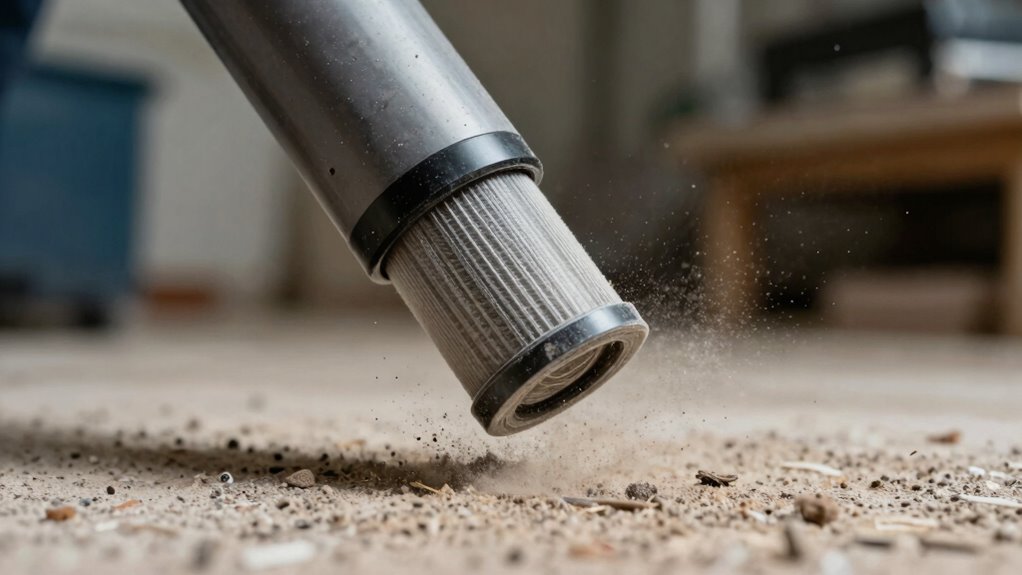
Are you concerned about the fine dust generated during your projects? If so, you already understand that traditional shop vacs might not be enough to keep your workspace safe and clean. Fine dust particles are tiny, often microscopic, and can linger in the air long after the job is done. That’s where HEPA shop vacs come into play. These vacuums are specifically designed to improve air filtration and dust containment, making them essential tools when dealing with fine dust rather than just general debris. While regular shop vacs are great for larger, visible debris, they fall short in capturing the microscopic particles that pose health hazards.
With a HEPA shop vac, you get a much higher level of filtration efficiency. HEPA filters are rated to trap at least 99.97% of particles as small as 0.3 microns. This means that even the tiniest dust particles, which can easily become airborne and inhaled, are effectively captured. When you’re working with materials like drywall, sanding, or cutting wood, fine dust is generated in abundance. Without proper air filtration, these particles escape into the air, settle on surfaces, or get inhaled. A HEPA shop vac prevents this by creating a sealed dust containment environment, ensuring that the dust stays inside the vacuum rather than spreading throughout your workspace.
Dust containment is vital for both your health and your workspace cleanliness. Fine dust can cause respiratory issues, especially if you’re exposed over long periods. A vacuum with HEPA filtration helps protect your lungs by filtering out dangerous particles before they can escape into the air. Plus, it keeps your work environment cleaner and reduces cleanup time. Unlike standard vacuums that might blow dust back into the room or allow it to settle on surfaces, a HEPA shop vac provides a closed system that minimizes dust escape. This containment not only improves safety but also increases your efficiency, as you won’t have to spend as much time sweeping or wiping down surfaces. Proper filtration is crucial for maintaining a healthy workspace and preventing long-term health issues related to fine dust inhalation. Additionally, investing in a HEPA system can contribute to indoor air quality improvements, which are essential for a healthier environment overall. Ensuring your workspace has good air filtration can significantly reduce the risk of respiratory problems caused by airborne particles. Properly managing fine dust is an essential part of sustainable and healthy workplace practices, protecting both your health and the environment. Incorporating advanced filtration technology into your dust management strategy is a wise choice for long-term safety and cleanliness.
As an affiliate, we earn on qualifying purchases.
Frequently Asked Questions
Can HEPA Vacuums Be Used for Wet Debris?
Yes, HEPA vacuums can be used for wet debris if they’re specifically designed for that purpose. These models help maintain dust containment and prevent spreading fine particles, especially when cleaning up wet debris. However, not all HEPA vacuums are appropriate for wet use, so check the manufacturer’s instructions. Using the right vacuum guarantees safe, effective cleanup without damaging the unit or releasing harmful dust into the air.
How Often Should HEPA Filters Be Replaced?
Sure, you’ll want to swap out your HEPA filter before it becomes a supercarrier of dust, virus, and pollen. Generally, HEPA filter lifespan depends on usage and environment, but most manufacturers recommend replacement every 6 to 12 months. Keep an eye on your vacuum’s performance; if airflow drops or odors persist, it’s time for a replacement. Regular maintenance guarantees your vacuum keeps working efficiently and healthily.
Are HEPA Shop Vacs Suitable for Outdoor Use?
Yes, HEPA shop vacs are suitable for outdoor use because they offer excellent outdoor durability and dust containment. You can confidently use them on construction sites, workshops, or gardening projects, knowing they keep fine dust and debris contained. Their rugged build withstands outdoor conditions, and the HEPA filter guarantees harmful particles stay trapped, making them a reliable choice for both indoor and outdoor cleanup tasks.
What Is the Cost Difference Between HEPA and Regular Vacs?
You’ll notice that HEPA vacs typically cost more than regular vacuums, mainly due to their advanced filters. The cost comparison shows HEPA vacs often range $100 to $300, while regular vacs are usually under $100. Additionally, HEPA filters tend to have a longer filter lifespan, making them more economical over time. Though pricier upfront, their durability and superior filtration can save you money in the long run.
Do HEPA Vacuums Require Special Maintenance?
Sure, HEPA vacuums do require some special maintenance routines, but it’s almost ironic—they need extra care for their delicate filters. You’ll want to monitor filter longevity and replace filters when needed, ensuring peak performance. Regularly check for clogs and keep the filters clean, making maintenance routines straightforward. Though it sounds like a hassle, it’s a small price to pay for efficient fine dust removal and cleaner air.
As an affiliate, we earn on qualifying purchases.
Conclusion
So, next time you’re tackling those tiny, stubborn dust particles, remember—your regular vacuum just might not cut it. HEPA shop vacs are designed for a reason, and ignoring their power could mean missing out on a cleaner, healthier space. But here’s the twist: as you uncover the true impact of fine dust, you’ll realize this isn’t just about cleanliness—it’s about what you might be risking without the right tools. Are you ready to find out more?
As an affiliate, we earn on qualifying purchases.
As an affiliate, we earn on qualifying purchases.
Fall Picks
fall essentials
As an affiliate, we earn on qualifying purchases.