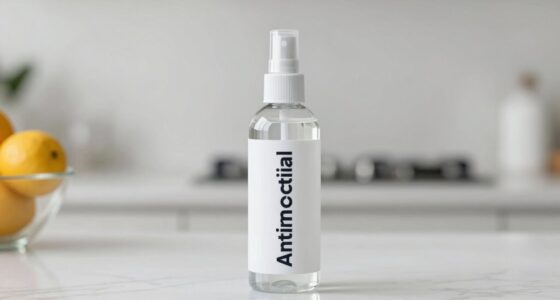
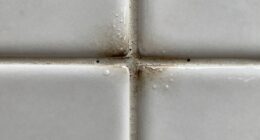
A “fresh” smell doesn’t mean your space is clean because fragrances often mask dirt, bacteria, or odors rather than eliminate them. Products use artificial scents to create an illusion of cleanliness, which can mislead you into thinking surfaces are sanitized when they aren’t. To truly assess cleanliness, look beyond the scent and check for residue or dirt. Keep exploring to discover how genuine freshness can be achieved without relying on deceptive fragrances.
Key Takeaways
- A fresh scent often masks underlying dirt or bacteria, giving a false impression of cleanliness.
- Artificial fragrances cover odors without removing germs or grime, misleading perception of hygiene.
- True cleanliness requires physical inspection and proper cleaning, not just a pleasant smell.
- Natural or scent-free products reveal actual cleanliness without relying on misleading fragrances.
- Relying solely on scent can hide residual dirt or microbes, compromising hygiene and indoor air quality.
How Fragrance Differs From Actual Cleanliness
While a fresh, fragrant scent might make your space feel clean, it doesn’t necessarily mean it’s truly hygienic. Many products rely on scent masking to cover up odors rather than eliminate bacteria or dirt. This is a common example of fragrance deception, where the smell suggests cleanliness without addressing underlying germs. The pleasant aroma can trick your senses into believing everything is sanitized, but in reality, you might still be exposed to harmful microbes. Companies often prioritize fragrance over actual cleaning power, giving you a false sense of hygiene. So, just because a room smells fresh doesn’t mean it’s free of germs. True cleanliness involves removing dirt and bacteria, not just hiding them with a sweet scent. Modern cleaning techniques leverage automation and advanced technology to ensure surfaces are genuinely sanitized rather than just smelling good. Employing proper sanitation methods is essential for truly maintaining a hygienic environment, especially considering that air purifier maintenance is crucial for consistent air quality and safety. Additionally, understanding the difference between cleaning and disinfecting can help you make more informed choices for your health.
Why Do Cleaning Products Use Artificial Scents?

Cleaning products use artificial scents because they quickly create a perception of freshness and cleanliness that appeals to consumers. These scents often employ chemical masking, which covers up unpleasant odors rather than eliminating their source. This scent deception tricks your senses into feeling the area is truly clean, even if dirt or bacteria remain. Manufacturers prefer artificial fragrances because they’re consistent, cost-effective, and long-lasting. Natural odors can vary and fade quickly, but synthetic scents ensure a uniform experience every time. By using these artificial fragrances, brands evoke a sense of freshness that may not reflect the actual cleanliness of the surface. Additionally, scent masking is a common technique that further contributes to the misconception of cleanliness. Ultimately, scent deception helps sell more products, but it doesn’t guarantee that your space is genuinely clean. Furthermore, energy-efficient cloud servers can support sustainable manufacturing processes by reducing the environmental impact of product production and distribution. Incorporating natural scent alternatives can also help consumers identify truly fresh and clean environments without relying on artificial fragrances. Using consumer perception as a marketing tool, companies often prioritize scent over actual cleaning efficacy. Advances in AI and content creation could also be utilized to develop more transparent marketing strategies that emphasize true cleaning performance.
How Can You Tell if a ‘Fresh’ Smell Is Covering Up Dirt?
A strong, overpowering scent can hide the smell of lingering dirt, making things seem cleaner than they are. Just because a space smells fresh doesn’t mean it’s truly clean; residual odors may still be present. Learning to detect these hidden smells helps you identify when a fresh scent is covering up dirt instead of eliminating it. For example, essential oils for air quality can influence how fresh a space truly feels versus how clean it is. Additionally, being aware of piercings and healing times can help prevent infections that might cause unpleasant odors, even if a space smells initially clean. Recognizing that natural cleaning methods can be more effective in truly eliminating dirt rather than just masking odors is also important. Proper ventilation and air circulation are crucial in dispersing residual smells and maintaining a genuinely fresh environment. Understanding how contingency plans are vital in maintaining consistent cleanliness standards can help you avoid relying solely on scents to create a fresh environment.
Overpowering Fragrance Masks Dirt
An overpowering fragrance can easily mask underlying dirt, making it hard to tell when surfaces are truly clean. This scent masking leads to fragrance deception, where a fresh smell hides grime or bacteria. To spot this, pay attention to clues beyond the scent:
- Surface feels sticky or grimy despite smelling fresh
- The smell fades quickly, revealing underlying odors
- You notice residue or streaks after cleaning
- The scent is overly strong or artificial, not natural
- Relying solely on scent can undermine effective cleaning, especially when disinfectant efficacy is compromised by masking fragrances
These signs suggest that the fragrance is covering up dirt rather than eliminating it. Fragrance deception tricks you into thinking a space is clean, but the overpowering scent is just a mask. Always trust your senses beyond the smell for a truly clean environment.
Fresh Scent Doesn’t Guarantee Clean
Even a fresh scent can be a false indicator of cleanliness. Just because you smell a clean, crisp fragrance doesn’t mean dirt or bacteria have been eliminated. Manufacturers often use scent masking to cover up lingering odors caused by chemical residue or dirt. This means the fresh smell might simply be hiding the true state of cleanliness, not improving it. Relying solely on scent can lead you to overlook areas that still harbor grime or bacteria. To truly determine if a space is clean, focus on physical inspection and proper cleaning methods rather than just the aroma. Remember, a fresh smell can be superficial, and chemical residue may still be present behind the scent. Don’t be fooled—look beyond the fragrance to assess real cleanliness.
Detecting Residual Odors
Sometimes, a lingering fresh scent can mask the presence of dirt or bacteria that cleaning didn’t fully remove. This is often due to chemical masking or scent deception, where fragrances cover odors rather than eliminate them. To detect residual odors, pay attention to subtle cues.
- Unpleasant or stale smells may still linger despite a fresh scent.
- Inconsistent scent levels can reveal areas where cleaning was incomplete.
- Physical sensations, like a dusty or sticky feeling, might indicate dirt remains.
- Breath or sniff test: breathe deeply near surfaces; if you catch an odor, scent masking is at play.
- Recognizing scent deception is essential for effective cleaning, ensuring that you’re not just covering up dirt with a false sense of freshness.
- Additionally, understanding the signs of incomplete cleaning can help you identify areas that need further attention.
Don’t rely solely on the scent; use your senses to identify hidden smells. Recognizing scent deception helps ensure you’re truly cleaning, not just covering up dirt with a false sense of freshness.
Ways to Verify Real Cleanliness Beyond Fragrant Smells
You can confirm cleanliness by checking for any residual dirt that might still be hiding. Using no-rinse solutions helps guarantee surfaces are truly clean without just masking odors. Additionally, paying attention to air quality can reveal if your space is genuinely fresh or just fragranced. For a comprehensive assessment, consider inspecting your vacuum’s filtration system, which can indicate how well it captures allergens and dirt. Moreover, understanding cleaning standards can help you set appropriate expectations for what “clean” truly means. It’s also helpful to be aware of privacy policies that govern how cleaning data might be collected and used, ensuring your information remains secure. Implementing air quality indicators can provide real-time feedback on your indoor environment’s cleanliness and freshness.
Check for Residual Dirt
While a fresh scent can mask dirt, it’s essential to look beyond fragrances to verify real cleanliness. Residual dirt often hides beneath a clean-smelling surface, making scent masking unreliable. To check for true cleanliness, consider these steps:
- Feel surfaces for roughness or sticky spots indicating leftover dirt
- Inspect corners and edges where grime tends to accumulate
- Use a clean cloth or paper towel to test for dirt transfer
- Check for lingering stains or discoloration not covered by scent masking
These methods help you identify if dirt has truly been removed or if a fresh fragrance is just covering up residual dirt. Relying solely on scent can be misleading, so stay vigilant and verify with physical checks.
Use No-Rinse Solutions
No-rinse solutions are a practical way to verify that surfaces are truly clean without relying solely on scent or visual cues. These solutions help you detect remaining chemical residues that can cause odor masking or surface contamination. When using no-rinse products, you simply wipe the surface and check for any streaks, residues, or lingering odors. To better understand, consider this table:
| Surface Type | No-Rinse Test Result | Indicator of Cleanliness |
|---|---|---|
| Glass | Clear, streak-free | No chemical residues or streaks |
| Plastic | No sticky or oily spots | No scent masking chemicals present |
| Metal | No dullness or residue | Surface is truly clean |
| Fabric | No residue visible or smell | Free from chemical residues |
| Wooden Surface | No sticky feel or lingering smell | Surface is free of residues or scent masking |
This approach ensures you’re verifying real cleanliness beyond fragrance.
Observe Air Quality
Observing air quality offers a straightforward way to confirm surfaces are genuinely clean, beyond relying on scent or visual cues. Good air circulation helps disperse trapped pollutants, revealing lingering odors that cleaning might mask. Pay attention to how scents are absorbed or linger; if unpleasant smells persist despite cleaning, true cleanliness isn’t achieved. You can also test for dust buildup or mold, which can impact air quality without visible signs. Consider these indicators:
- Poor air circulation leading to stagnant, stale air
- Persistent odors indicating incomplete cleaning
- Dust or allergens settling despite cleaning efforts
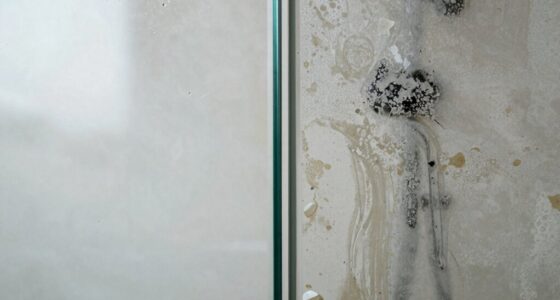
- Mold or mildew growth hidden behind surfaces
Monitoring indoor air quality can further guide effective cleaning practices. Ensuring proper ventilation strategies can help maintain healthier indoor environments and more accurately reflect cleanliness. Additionally, monitoring humidity levels and air filtration effectiveness plays a key role in maintaining healthy indoor air.
Natural Ingredients That Help Achieve Authentic Freshness

Natural ingredients play an essential role in creating authentic freshness in fragrances. They offer genuine aromas that evoke clean, crisp feelings without relying on artificial scent deception. Ingredients like citrus oils, eucalyptus, and mint provide vibrant, natural scents that mimic the true essence of freshness. These elements help avoid aroma illusions that often mislead you into thinking a product is fresh when it’s not. By choosing natural ingredients, you support transparency and reduce exposure to synthetic chemicals that can create a false sense of cleanliness. When you opt for products with authentic natural components, you’re more likely to experience a scent that genuinely reflects freshness, not just a cleverly crafted illusion. This honest approach ensures your environment smells true, not artificially enhanced.
Common Fragrances That Might Mask Odors in Your Home
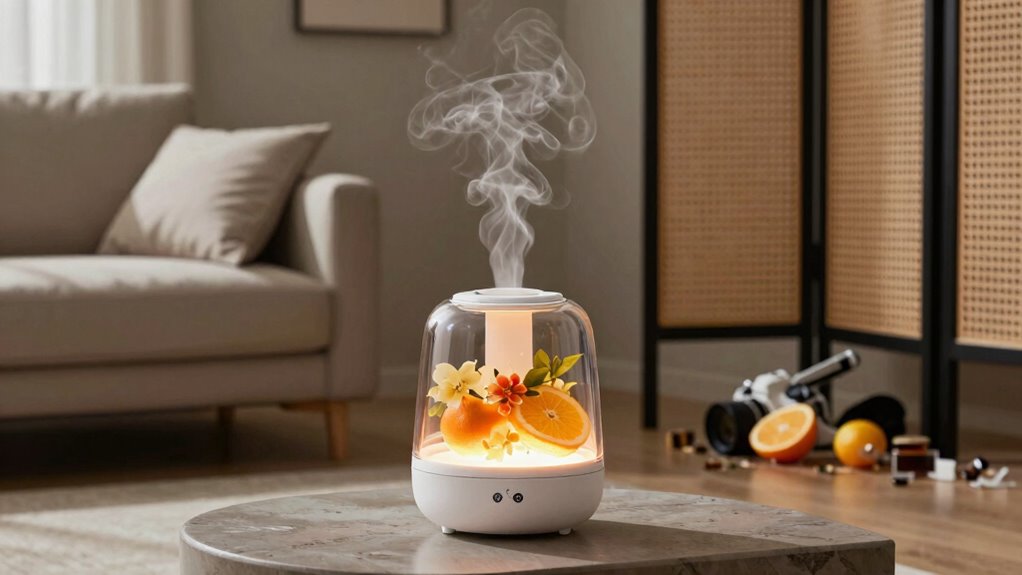
Many home fragrances, like synthetic sprays, potpourri, and air fresheners, can hide odors but don’t eliminate them. These options often provide a quick scent fix, but they might just be masking the problem. Understanding what’s in these fragrances helps you choose smarter ways to keep your home smelling fresh.
Synthetic Scented Sprays
Synthetic scented sprays are a popular quick fix for masking unpleasant odors in your home. They often rely on chemical masking, which temporarily covers smells instead of removing their source. While they might make your space smell fresh, they also engage in scent deception, giving a false impression of cleanliness. These sprays contain synthetic fragrances that can trigger allergies or irritate your respiratory system. Be aware that many products mask odors rather than eliminate them, creating a misleading sense of freshness.
Consider these points:
- They often contain harmful chemicals
- Mask odors without addressing the root cause
- May worsen indoor air quality
- Can cause allergic reactions or sensitivities
Using sprays might seem effective, but they don’t truly refresh your home’s air quality.
Potpourri and Sachets
Potpourri and sachets are popular options for adding pleasant scents to your home, often chosen as a more subtle alternative to sprays. They release a gentle aroma that can temporarily mask odors, giving the impression of freshness. However, these fragrances don’t eliminate odors—they simply cover them up through scent masking.
| Fragrance Type | Effect |
|---|---|
| Potpourri sachets | Mask odors, add decor |
| Scent masking | Cover unwanted smells |
While they can make spaces smell inviting, relying solely on potpourri sachets might hide underlying issues like mold or spills. Remember, a true clean involves eliminating odors at the source, not just covering them with a pleasant scent.
Air Freshener Options
Choosing the right air freshener can instantly improve the scent of your home, but it’s important to recognize that many common fragrances are designed to mask odors rather than eliminate them. These products often rely on chemical masking, which temporarily covers up smells instead of addressing their source. Overusing scents can lead to scent overuse, making your home feel artificially perfumed and potentially triggering allergies or sensitivities. Some popular options include aerosol sprays, plug-ins, scented candles, and essential oil diffusers. While these can provide quick freshness, they often only mask odors with strong fragrances. Be mindful that relying solely on these products may hide problems instead of solving them, giving a false sense of cleanliness. Opt for odor-eliminating solutions when possible for a truly fresh and healthy home environment.
Why Relying Only on Smell Can Be Deceptive for Hygiene
Relying solely on smell to judge hygiene can be misleading because a fresh scent doesn’t necessarily mean you’re clean. Scent misdirection occurs when products mask odors, giving the illusion of cleanliness without actual sanitation. Many air fresheners and scented cleaning agents conceal unpleasant odors through odor concealment techniques, but they don’t eliminate bacteria or dirt. You might smell fresh and feel confident, yet harmful germs could still be present. This false sense of security can lead to neglecting proper cleaning routines. Remember, a pleasant aroma is not a reliable indicator of hygiene. True cleanliness involves thorough cleaning and disinfecting, not just covering up smells. Don’t let scent misdirection fool you into believing your space is hygienic when it’s not.
Tips to Identify Truly Clean Spaces and Items
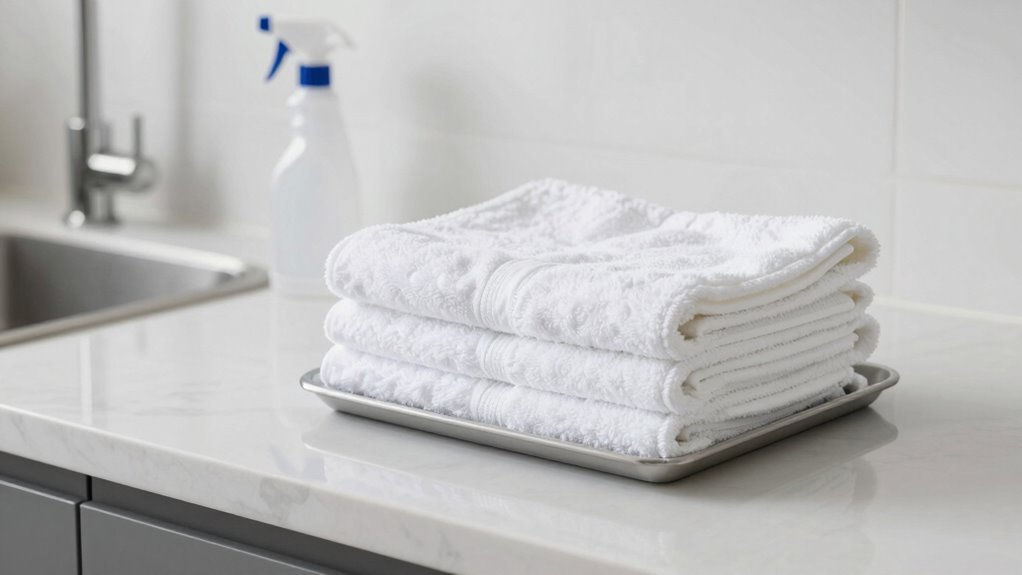
While a fresh scent can be tempting proof of cleanliness, it doesn’t tell the whole story. To truly identify clean spaces and items, look beyond fragrances. Check for signs of thorough cleaning, like clear surfaces and absence of dust. Be mindful of chemical residues that may linger, especially from cleaning products. Avoid spaces that mask dirt with artificial scents, as these can hide allergen triggers. Test surfaces by wiping them with a clean cloth—if dirt or grime appears, they’re not fully clean. Consider the materials—natural or uncoated surfaces are easier to verify. Finally, ask about cleaning methods used; effective cleaning minimizes residue and allergens, ensuring true cleanliness. Remember, scent isn’t a reliable indicator—thorough inspection and awareness are key.
Natural and Fragrance-Free Cleaners for Fresh Results
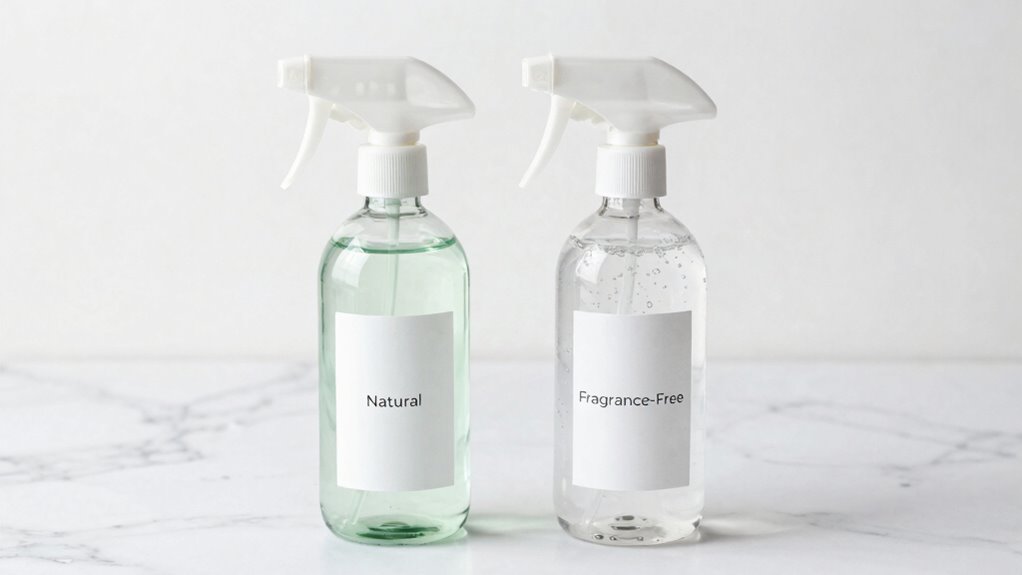
Natural and fragrance-free cleaners offer a safe and effective way to achieve a fresh, spotless home without relying on artificial scents or harsh chemicals. These products focus on their chemical composition, using ingredients like vinegar, baking soda, or plant-based extracts that clean thoroughly without masking odors with added fragrances. Unlike scented cleaners, they don’t depend on scent masking to hide unpleasant smells; instead, they neutralize odors naturally. By avoiding synthetic fragrances, you reduce exposure to potential irritants and allergens. This approach guarantees a genuinely fresh environment, free from misleading scents that only cover up dirt or odors. With natural, fragrance-free options, you get trustworthy cleanliness that’s healthier for your home and your wellbeing.
What Do Labels Say About Fragrances and Cleanliness?

Labels on cleaning products can reveal a lot about their approach to fragrance and cleanliness. They often hint at whether a product relies on scent masking or leaves behind chemical residues. Look for terms like “fragrance-free” or “unscented,” which indicate minimal or no added scents. Beware of labels that mention “fresh scent”—these may mask underlying odors with artificial fragrances, hiding chemical residues rather than removing dirt. Some labels specify “natural fragrance” or “botanical extracts,” suggesting a gentler scent approach. Others highlight “chemical-free” formulas, prioritizing cleanliness without scent masking. Reading labels helps you choose products that truly clean without misleading you into thinking they’re fresher than they are. Ultimately, clear labels empower you to select safer, more transparent options.
Frequently Asked Questions
Can a Room Smell Fresh Without Being Truly Clean?
Yes, a room can smell fresh without being truly clean. You might notice a pleasant scent due to air fresheners or scented candles, but that doesn’t necessarily mean the air quality is good or surfaces are sanitized. Your scent perception can be influenced by these fragrances, masking underlying dirt or poor air quality. To guarantee cleanliness, focus on proper cleaning and ventilation instead of relying solely on fresh-smelling products.
Are Natural Fragrances Safer Than Synthetic Ones?
Natural fragrances, derived from natural extracts, are generally considered safer than synthetic chemicals, which often contain artificial additives. When you choose products with natural extracts, you reduce your exposure to potentially harmful synthetic chemicals that can cause allergies or irritations. However, keep in mind that natural doesn’t always mean completely safe—some natural extracts can still trigger sensitivities. Always check labels and opt for what best suits your health and preferences.
How Long Do Artificial Scents Typically Last?
You might worry about artificial scents lingering too long, but most air fresheners last about 30 minutes to several hours, depending on the product and environment. Scent longevity varies, so if you want a subtle, lasting freshness, choose products with natural or low-scent formulas. Keep in mind, overly strong artificial scents can become overwhelming, so it’s best to find a balance that keeps your space feeling fresh without overpowering your senses.
Why Do Some Products Smell Strong but Clean Poorly?
You’ll notice some products smell strong but clean poorly because of scent overload and chemical masking. Manufacturers often add powerful fragrances to hide underlying odors, but this creates a scent overload that masks the real smell rather than removes it. As a result, the product might smell fresh temporarily, but it doesn’t effectively clean or eliminate odors. Look for products with balanced, natural ingredients for a genuinely clean and fresh scent.
Can Persistent Scents Indicate Hidden Mold or Bacteria?
Yes, persistent scents can signal hidden mold or bacteria. If a smell lingers despite cleaning, it’s a warning sign of mold detection or bacteria indicators lurking beneath surfaces. These odors often come from unseen issues, silently affecting your space’s health. Don’t ignore them—investigate further. A lingering smell isn’t just an annoyance; it’s a clue that something more serious may be hiding, waiting to be uncovered.
Conclusion
Don’t be fooled by a fresh scent—it’s often just masking dirt or bacteria. Trust your senses and look for signs of real cleanliness, like clear surfaces and absence of grime. Natural ingredients and fragrance-free products can give you genuine freshness without deception. Remember, a smell isn’t proof of cleanliness; evidence and your own inspection matter most. Question the theory that fragrance equals hygiene—true cleanliness goes beyond scent.