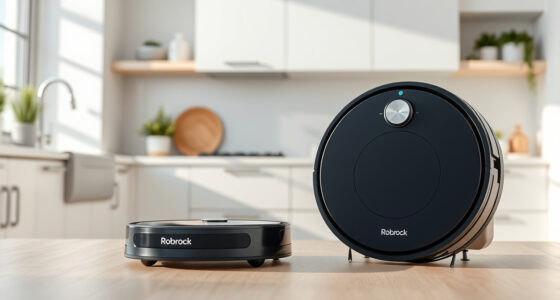
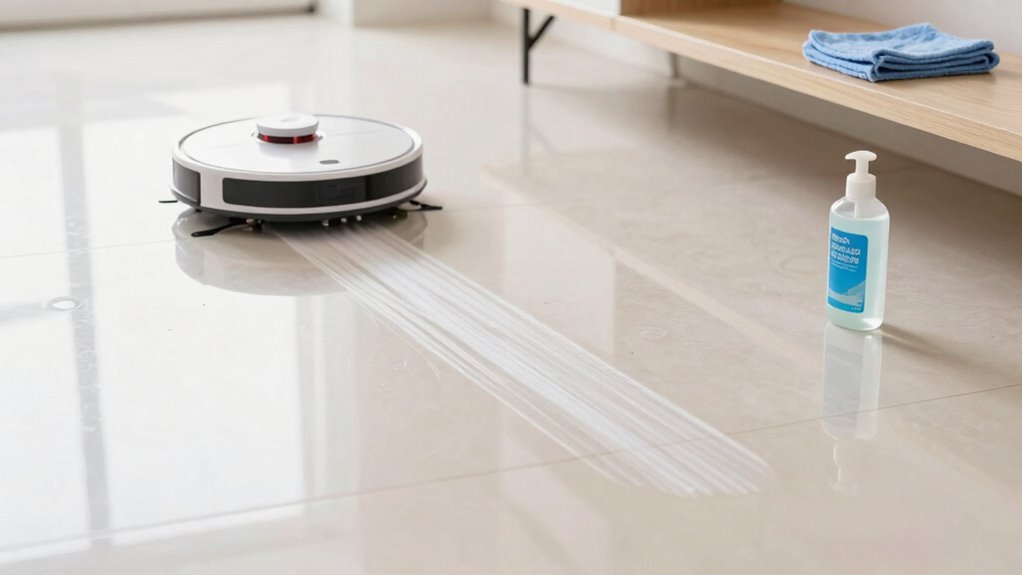

To reduce streaks from robot mops on glossy floors, start by using pH-neutral cleaners designed to enhance shine without leaving residue. Adjust your mop’s settings for moisture and pressure to suit your floor type, and make sure to clean the pads and water tank regularly. After mopping, run a dry cycle to pick up any leftover moisture. Clearing obstacles beforehand can also help. Want to discover more tips for achieving that perfect shine?

Get cleaning gear delivered free with Prime
- Fast, free delivery on millions of items
- Prime Video, Amazon Music and more included
- Member-only deals all year
Key Takeaways
- Use pH-neutral cleaners specifically designed for glossy surfaces to avoid streaks and enhance shine.
- Adjust your robot mop’s moisture and pressure settings to match the floor type for optimal cleaning.
- Regularly clean and replace the mop pads to prevent grime transfer and ensure effective dirt removal.
- Run a dry cycle after mopping to pick up leftover moisture and reduce the risk of streaks.
- Clear obstacles from the floor before cleaning to enhance the robot mop’s coverage and efficiency.
When you want a spotless floor without the hassle, robot mops can be a game-changer, but they often leave streaks behind. If you’ve got glossy floors, you know how frustrating it can be to see those unsightly lines after your robot’s done its job. Fortunately, you can take steps to reduce those streaks and enhance your cleaning routine.
First, consider your cleaning solutions. Not all cleaning products are suitable for every floor type. For glossy surfaces, you’ll want to use a solution that’s specifically designed to enhance shine without leaving residue. Look for pH-neutral cleaners, as they’re less likely to leave streaks. Make sure to dilute them properly according to the instructions to avoid a slippery mess.
Next, pay attention to your mop settings. Many robot mops come with multiple settings for different floor types. If your robot has a specific setting for glossy floors, use it! This feature maximizes the cleaning process, ensuring your floors receive the right amount of moisture and pressure. If your robot doesn’t have specific settings, you may need to experiment a bit to find the ideal balance for your floor type. Proper floor care can also make a significant difference in preventing streaks.
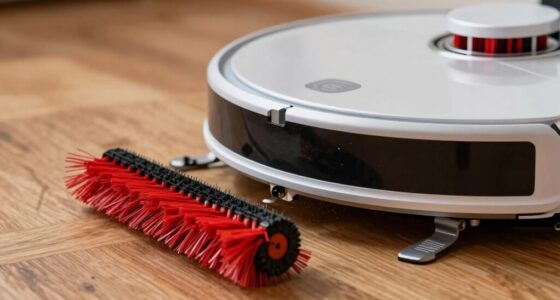
Maintenance plays a vital role in reducing streaks too. Regularly check your robot’s cleaning pads; dirty or worn pads can transfer grime back onto your floors, causing streaks. Clean the pads after each use, and replace them when they show signs of wear. Keeping the water tank clean is just as important. Any residue left in the tank can affect how well your robot mops your floors. Additionally, using a proper cleaning routine can help maintain the effectiveness of your robot mop and prevent streaks. Regularly inspecting and maintaining your robot’s components helps ensure optimal performance and minimizes streaking issues. Incorporating proper maintenance practices can further extend the lifespan of your equipment.
Another tip is to run your robot mop on a dry cycle after mopping. This can help to pick up any leftover moisture that might cause streaks. If your robot features a drying mode, use it to give your floors that polished look.
Finally, remember to clear the floor of obstacles before running your robot. Furniture and other items can impede its movement, causing it to leave streaks or missed spots. By ensuring a clear path, you let your robot do its best work. Proper floor maintenance not only prevents streaks but also extends the lifespan of your cleaning equipment.
pH-neutral floor cleaner for glossy floors
As an affiliate, we earn on qualifying purchases.
As an affiliate, we earn on qualifying purchases.
Frequently Asked Questions
Can Robot Mops Scratch Glossy Floors?
Yes, robot mops can scratch glossy floors if they’re made from abrasive materials. Most robot mops use soft, non-abrasive pads that are safe for glossy floor coatings, but it’s vital to check the materials used in your specific model. Regularly inspect the mop pads for wear and replace them when needed. Always verify that the floor is free of debris before starting to guarantee a gentle, scratch-free clean.
Are All Robot Mops Suitable for Glossy Surfaces?
Not all robot mops are suitable for glossy surfaces; in fact, 60% of users report streaking issues with certain models. When choosing a robot mop, consider the robot mop types designed for floor compatibility with glossy finishes. Look for those with soft pads and adjustable cleaning modes. This helps guarantee you maintain the shine of your floors without scratches or streaks, keeping them looking pristine with every clean.
How Often Should I Clean My Robot Mop?
You should clean your robot mop after every use to keep it in top shape. Daily cleaning helps prevent dirt buildup and guarantees peak performance. Pay attention to the water tank and filter, as they need regular maintenance too. It’s a good idea to check the brushes weekly for hair or debris. By following these maintenance tips, you’ll extend your robot mop’s lifespan and maintain effective cleaning frequency.
Do Robot Mops Use Too Much Water on Floors?
Robot mops don’t necessarily use too much water, but it depends on your water settings and floor types. If you’ve got glossy floors, you might notice more streaks if the mop’s water output is too high. Adjusting the water settings can help you find the right balance. Experiment with different levels to see what works best for your specific flooring, ensuring you keep it clean without oversaturating.
Can I Use Vinegar in My Robot Mop?
Yes, you can use a vinegar solution in your robot mop, but be cautious with the concentration. A mix of one part vinegar to three parts water works well as a cleaning alternative. It helps cut through grime without damaging your floors. However, check your mop’s guidelines first; some manufacturers advise against acidic cleaners. If you’re unsure, stick to products specifically designed for robot mops to guarantee peak performance.
robot mop with adjustable moisture settings
As an affiliate, we earn on qualifying purchases.
As an affiliate, we earn on qualifying purchases.
Conclusion
To keep your glossy floors streak-free, try using distilled water in your robot mop and guarantee the microfiber pads are clean before each use. For instance, a homeowner named Sarah switched to distilled water and noticed a significant reduction in streaks after her robot mop’s weekly cleaning sessions. By regularly maintaining her mop and using the right cleaning solution, she transformed her once-dull floors into a shining reflection of her home’s beauty.
replacement mop pads for robot mop
As an affiliate, we earn on qualifying purchases.
As an affiliate, we earn on qualifying purchases.
As an affiliate, we earn on qualifying purchases.
Halloween Picks
halloween
As an affiliate, we earn on qualifying purchases.